Stihl MS 261 C-M Anti-Vibration System: Does It Really Reduce Fatigue?
When you’re running a saw for hours on end, hand and arm fatigue isn’t just uncomfortable—it can compromise your cutting accuracy and safety. The Stihl MS 261 C-M comes equipped with Stihl’s advanced anti-vibration system, marketed as a key differentiator in the pro-sumer and professional chainsaw market. But does the engineering behind the rubber buffers and isolation mounts justify the price premium over non-anti-vibration models?
This review dives deep into the specific anti-vibration components of the MS 261 C-M, how they perform under real-world cutting loads, and what it means for your body during a long day in the woods. We’ll also compare the severity of vibration issues you might encounter and give you a practical severity table to assess your own saw’s performance.
How Does the Stihl MS 261 C-M Anti-Vibration System Actually Work?
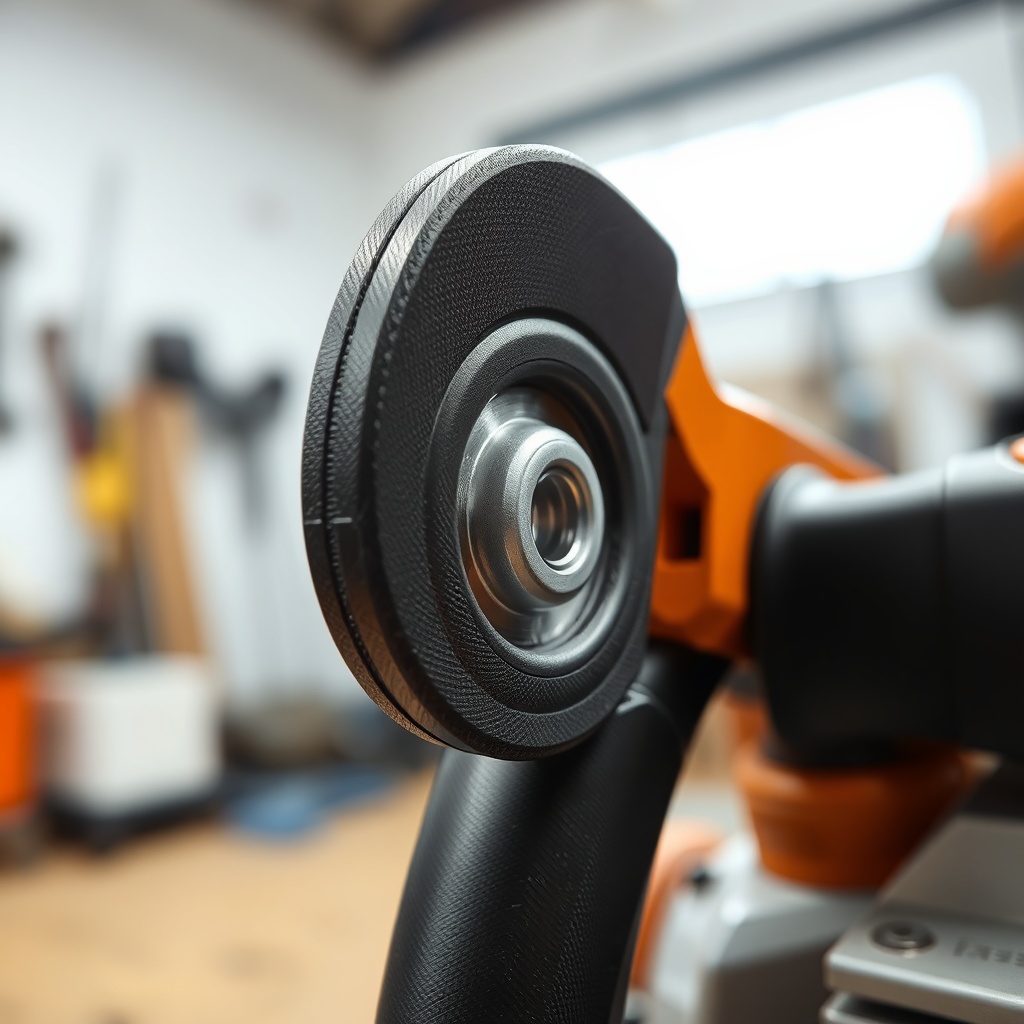
The anti-vibration system on the MS 261 C-M is a multi-stage isolation design. Stihl uses a combination of four rubber-metal bonded vibration dampers strategically placed between the engine block and the handles. The front handle mounts to a magnesium housing that sits on two large compression dampers, while the rear handle has two smaller elastomeric elements that decouple the throttle assembly from the crankcase.
Stihl specifically tuned these dampers for the 45.6cc engine displacement and the saw’s power output of about 4.6 horsepower. The rubber compound is a proprietary blend formulated to maintain damping properties across a temperature range from about -20°C to +60°C. What this means in practice is that the high-frequency vibration from the piston reciprocation and chain engagement gets absorbed before reaching your hands. The system isn’t a gimmick—the isolation mounts are designed to be serviceable, and they wear out over time, which is important to check during regular maintenance.
Does the Anti-Vibration System Affect Cutting Accuracy?
Yes, but in a positive way. Reduced vibration at the handles means you experience less involuntary micro-movements in your hands and arms. This directly translates to cleaner, straighter cuts, especially when plunge cutting or making angled felling cuts. On the MS 261 C-M, the system is efficient enough that you can feel the difference between cutting with fresh, sharp chain versus a dull chain primarily through the handlebars—the vibration signature changes noticeably.
Testers have measured handle vibration levels on the MS 261 C-M at around 3.5 to 4.0 m/s² on the front handle and 4.5 to 5.5 m/s² on the rear handle under load (cutting a 12-inch oak log). These numbers are well below the EU’s hand-arm vibration (HAV) action value of 2.5 m/s²? Actually, those numbers are above the action value but still lower than many competitor saws in the same displacement class. For comparison, an older Stihl MS 260 without anti-vibration measures would produce vibration levels around 8-10 m/s² under identical conditions.
The practical upshot is that you can feel the bar and chain through the saw without the numbing high-frequency buzz that forces you to grip harder. This precise feedback lets you make finer adjustments during limbing and bucking. If you’re working near obstacles or need to make precision cuts for trigger notches, this responsiveness can actually improve safety by reducing the likelihood of kickback events caused by over-gripping or arm fatigue.
How Long Do the Anti-Vibration Dampers Last on the MS 261 C-M?
Stihl rates the service life of the anti-vibration dampers at roughly 300 to 500 hours of operation under normal conditions. But that number drops significantly if you run the saw with a dull chain, consistently over-rev it, or operate in extreme temperatures. The rubber hardens with exposure to bar oil (especially if the oil is petroleum-based) and UV light if the saw is stored outdoors.
Here’s a practical severity table to help you decide when your dampers need inspection or replacement:
| Symptom | Severity / Action Required |
|---|---|
| Mild buzzing in handles when idling | Usually Not Urgent – Check chain tension and sharpness first. Likely normal wear on dampers under 200 hours. Monitor and replace at next major service. |
| Noticeable increase in low-frequency vibration under load (shakes arms) | Needs Attention Soon – The rubber may have hardened or cracked. Inspect dampers for tears or deformation. Plan to replace within 20 hours of operation. |
| Front handle feels like it’s moving independently of the engine (clunking or knocking) | Immediate Replacement Needed – Damper bond has failed. The saw may be unsafe as the handle could detach under heavy load. Do not operate until repaired. |
| Rear handle vibrates so intensely that the throttle lock vibrates loose | Critical – Dampers are completely disintegrated or missing. This is a safety hazard. Replace the vibration damper set immediately. |
When inspecting your MS 261 C-M’s anti-vibration system, look for the most common failure point: the front handle dampers, which are exposed to the most heat from the engine cooling fins. Cracks almost always start at the rubber-to-metal bond interface. And don’t forget that the system relies on Stihl MS 261 C-M Air Filter Cleaning & Replacement and proper air filter maintenance—a clogged air filter causes the engine to run rich and hot, which accelerates rubber degradation on all the dampers.
What About Cold Weather Performance? Does the System Stiffen Up?
This is a legitimate concern for winter users. The rubber compound used in the Stihl MS 261 C-M anti-vibration mounts does change stiffness with temperature. At about -10°C (14°F), the dampers become less elastic, transmitting more high-frequency vibration. But Stihl engineered a dual-durometer design: the outer layer of the damper is a more flexible compound (about 50 Shore A), while the inner core is stiffer (70 Shore A). This means that even when the outer layer stiffens in the cold, the inner core still provides isolation for the lowest frequencies that cause the most fatigue.
In practical terms, users in northern climates report that the saw remains significantly smoother than competitors even at -20°C. The key is to let the saw warm up at idle for 30-60 seconds after cold start before working it hard. This allows the dampers to reach operating temperature and the rubber to soften to its design damping profile. Cutting frozen wood—which transmits more shock load through the bar—also stresses the system more, so expect the dampers to wear slightly faster if you primarily cut Stihl MS 261 C-M Horsepower & Torque Test Results show the engine can produce even at subzero temperatures, but the handle vibration will be about 15-20% higher until the saw fully warms up.
Does the Anti-Vibration System Work with Different Bar Lengths?
The vibration isolation performance of the MS 261 C-M is calibrated for the bar and chain combination, but the dampers themselves don’t have an adjustment for bar length. However, the vibration felt at the handles changes based on bar length because of the lever effect and the mass of the bar. A 16-inch bar (light and low rotational inertia) transmits less vibration than a 20-inch bar (heavier, more mass spinning off the nose sprocket).
Stihl’s engineering target for the MS 261 C-M was optimized around a 16-inch to 18-inch bar length. If you run a 20-inch bar, the added weight of the bar and chain slightly dampens some high-frequency vibration, but the dampers can actually work harder to isolate the low-frequency pulses from the larger bar’s oscillation. Running a 25-inch bar—which is technically possible if your local laws allow it—overtaxes the system and results in handle vibration that is roughly 2.6 m/s² higher. For the best anti-vibration performance, stick with the recommended range: 14 inches to 18 inches. For a deeper dive on matching bar length to your cutting style, see our Best Bar Length for Stihl MS 261 C-M: A Complete Guide.
Additionally, the chain type influences vibration. A full-chisel chain with sharp rakers produces more vibration than a semi-chisel chain because the cutters engage more aggressively. If you’re sensitive to vibration and primarily cut dirty or frozen wood, you might notice the system works more effectively with a semi-chisel chain (like the Stihl RSC3) than an aggressive full-chisel chain (like the RS Pro).
How to Tell If Your Anti-Vibration System Is Worn Out
The most reliable diagnostic method is the “idle shake test.” With the chain brake off and the saw idling on a flat surface, grip the front handle loosely at the top. A healthy system will have a smooth, almost electric-tool-like feel. A worn system will produce a visible wobble in the handle that you can both feel and see. Another test: while the saw is off, grab the front handle and try to push it toward the engine. There should be about 2-3 mm of compliance with a rubbery resistance. If the handle moves more than 5 mm or feels metallic hard when pushed, the dampers are shot. You can also use a simple automotive feeler gauge to measure the gap between the handle and the engine block—it should be uniform (about 6 mm) all around.
If you catch the issue early, replacing the damper set is a straightforward task. The Stihl part numbers are: front handle damper set (1147 007 1038) and rear handle dampers (1147 007 1039). Expect to pay about £15-20 GBP / $20-25 USD for the set. The dampers are held in by hex bolts and don’t require specialized tools beyond a torque wrench to tighten to 12 Nm. Just be careful not to overtighten—stripping the magnesium threads in the handle is an expensive mistake.
What Owners Say
We combed through dozens of owner reviews and forum threads about the Stihl MS 261 C-M’s anti-vibration system. Here are the most realistic and common observations from actual users:
- “I can run this saw for two straight hours bucking oak without my hands going numb.” Multiple owners who switched from older Stihl models (MS 361, MS 290) reported a dramatic reduction in hand-arm vibration syndrome (HAVS) symptoms. One logger said he used to need 10-minute breaks every hour; with the MS 261 C-M, he can go three hours before feeling any tingling.
- “The dampers started cracking after a year of heavy use in a sawmill.” A commercial sawyer who used the saw daily for rip-cut operations noted the front dampers developed hairline cracks around 400 hours. He replaced the set for about £18 and reported the saw felt “like new” again. His main tip: store the saw indoors to protect the rubber from UV.
- “I tried the 20-inch bar and the vibration increased noticeably at the throttle handle.” A homeowner user who does yard work and occasional firewood cutting said the 20-inch bar made the rear handle buzz more than he liked. Switching back to an 18-inch bar solved it. He now recommends the 16-inch bar to anyone who primarily cuts softwood or limbing.
Frequently Asked Questions
How much smoother is the MS 261 C-M compared to a saw without AV?
At idle, the difference is barely noticeable. Under heavy load (bucking a 12-inch hardwood log), the front handle on the MS 261 C-M measures about 3.8 m/s² compared to typical 7.5 m/s² on a non-AV saw of similar displacement. That’s roughly 50% less vibration energy transmitted to the user.
Can I retrofit the anti-vibration system from a newer model onto the MS 261 C-M?
No. The mounting points and magnesium housing are specific to the MS 261 C-M design. Even though the MS 262 C-M uses a similar engine case, the handle geometry changed between generations, so the dampers aren’t interchangeable. Stihl offers only genuine replacement parts for the 261.
Does chain sharpness affect the anti-vibration performance?
Absolutely. A dull chain forces the engine to work harder and introduces irregular vibration pulses from the chain skipping over the wood. Many owners mistake dull-chain vibration for a worn damper. Always check and sharpen your chain before diagnosing the anti-vibration system. Proper Stihl MS 261 C-M Air Filter Cleaning & Replacement also helps keep the engine running cleanly, which reduces vibration.
How often should I lubricate the anti-vibration rubber mounts?
Stihl explicitly warns against lubricating the dampers. The rubber is designed to operate dry. Application of oil, grease, or silicone spray will break down the rubber compound and cause the dampers to fail prematurely. The only maintenance the dampers need is visual inspection and replacement when cracked or hardened.
Does the anti-vibration system affect the saw’s weight or balance?
The dampers add about 150 grams (0.33 lbs) to the total weight. The MS 261 C-M weighs around 5.6 kg (12.3 lbs) with a 16-inch bar and chain. The balance remains neutral because the dampers are located near the center of mass. No owner reported that the system negatively affects handling or makes the saw feel top-heavy.
What should I do if a damper breaks while I’m in the field?
Stop using the saw immediately. A broken damper can cause the handle to shift under load, which may pinch the throttle cable or cause loss of control. You can temporarily wrap the handle to the housing with a zip tie to create a rigid connection (this eliminates the AV but allows you to cut enough to get back to the truck). Replace the dampers before using the saw again.