You Squeeze the Trigger and Nothing Happens
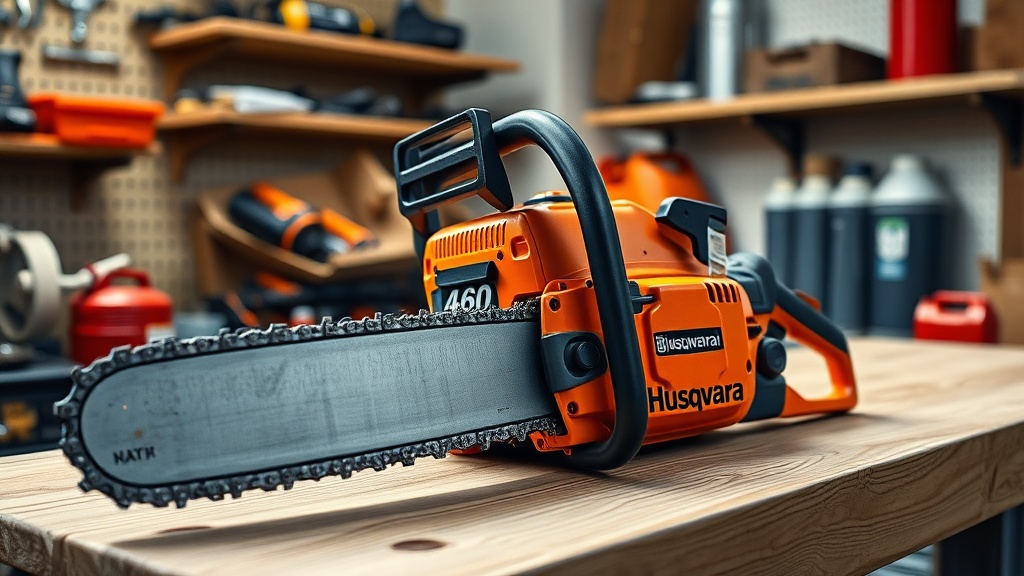
There’s nothing more frustrating than pulling the starter cord on your Husqvarna 460 Rancher and getting silence. This saw is a workhorse for firewood cutting and light forestry, but even the best machines have their off days. Before you haul it to a shop, understand that most no-start conditions are caused by a handful of common, fixable issues. This article walks you through the most frequent culprits, from stale fuel to a flooded carburetor, so you can get back to cutting.
We’ll cover diagnostics, simple fixes, and what to do when the problem is more serious. Let’s get that 460 Rancher running again.
Is It a Fuel Problem? (And Which One?)
The fuel system is the number one reason a Husqvarna 460 Rancher refuses to start. If the saw has been sitting for more than 30 days, ethanol-blended fuel can turn into a gummy varnish that clogs the carburetor jets. But it might not be that complicated. Let’s check two simple things first.
1. Stale or Water-Contaminated Fuel
If the fuel in the tank is more than 60 days old (without stabilizer), drain it completely. Replace it with fresh 89-octane or higher gasoline mixed at a 50:1 ratio with a high-quality two-stroke oil. If the fuel smells like nail polish remover, it’s bad. If you see water droplets settling at the bottom of the tank after shaking, the fuel is contaminated.
2. Clogged Fuel Filter or Lines
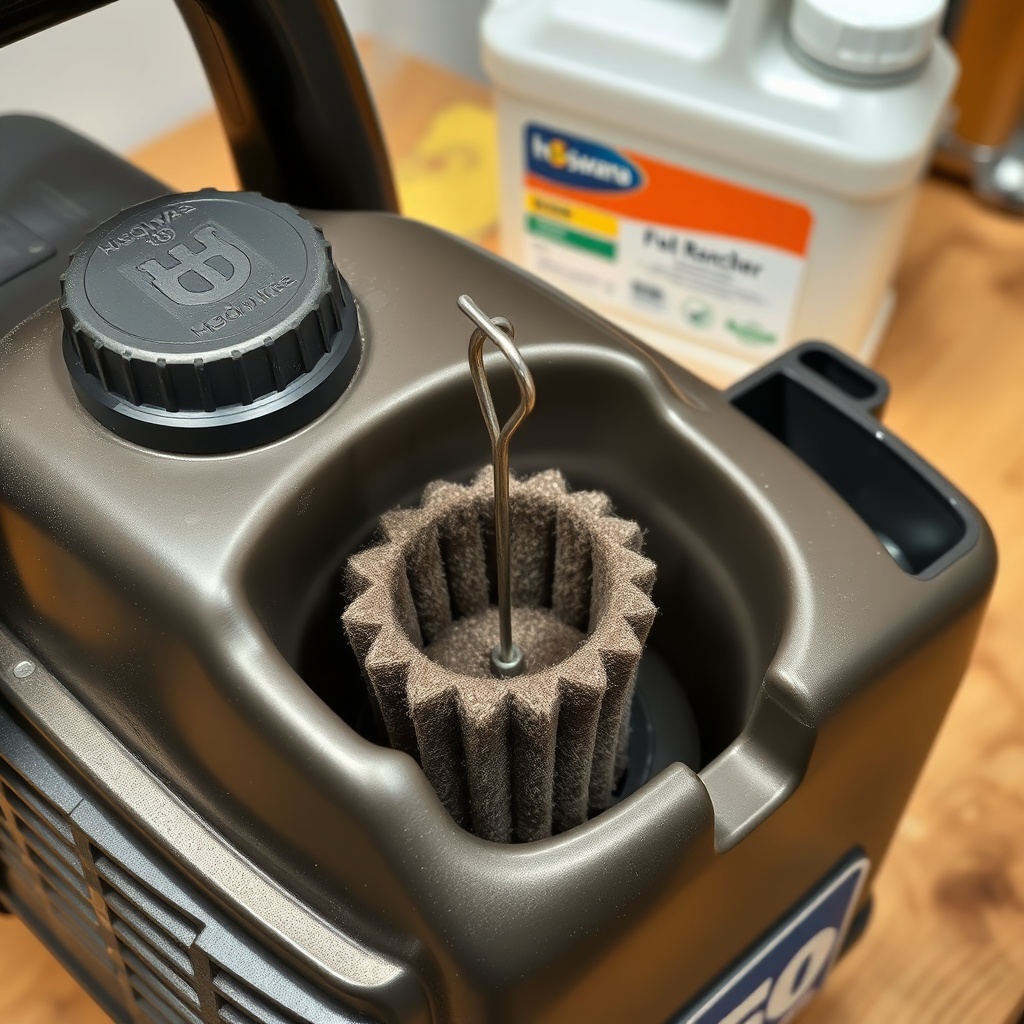
Inside the tank, a felt-style fuel filter sits on the end of the pickup line. Over time, sediment can block it. Remove the cap, use a piece of stiff wire (like a coat hanger bent into a hook) to fish the filter out through the filler neck. If it’s dark brown or stiff, replace it. The fuel line itself can also crack or harden, especially near the carburetor connection. A quick check: with the spark plug removed, pull the starter cord. You should see a clear pulse of fuel moving through the line.
Quick fix: If the saw starts with a squirt of starting fluid (into the carburetor intake or spark plug hole) but dies immediately, you have a fuel delivery problem.
Spark Check: Is the Ignition System Working?
No spark means no fire. Even a brand-new saw can have a fouled spark plug. Your 460 Rancher uses a standard RCJ6Y (or equivalent) plug. Here’s how to check spark safely.
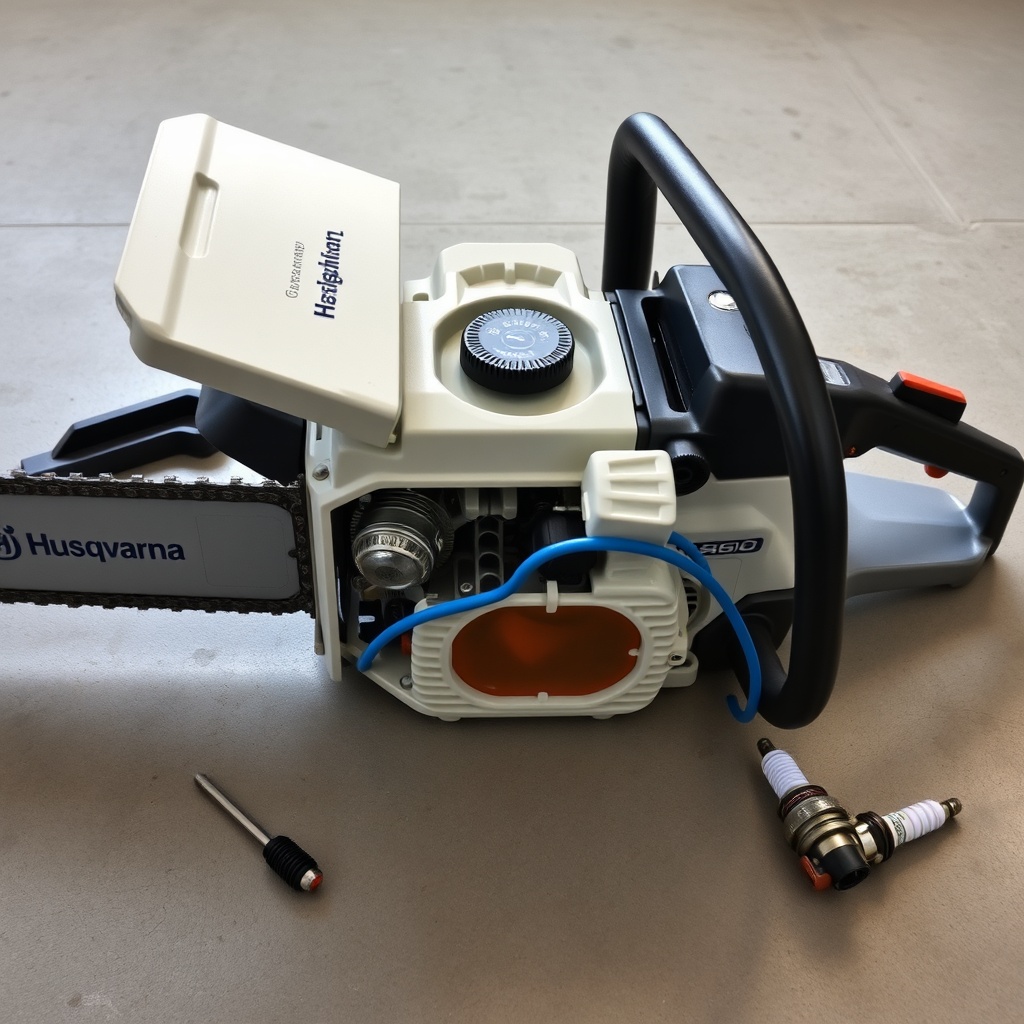
Step 1: Remove the spark plug wire boot. Use a spark plug socket (5/8 inch) to remove the plug. Inspect the electrode. It should be a dry, light tan or gray color. If it’s wet with fuel, black, or has a heavy carbon deposit, it’s fouled or the air-fuel ratio is too rich. If it’s wet with oil, you have a lubrication issue.
Step 2: Reinstall the spark plug into the boot (do not ground it against the cylinder head yet). Pull the starter cord briskly while holding the threaded metal base of the plug against a clean, bare metal spot on the cylinder head. You should see a bright blue spark jump across the gap. A weak yellow spark is a sign of a failing coil or a bad ground.
Step 3: If no spark, repeat the test with a brand-new plug. If still no spark, the problem is likely the ignition coil. Check the coil gap: it should be 0.3mm (0.012 inches) between the coil arm and the flywheel magnets. Use a feeler gauge for accuracy.
Air Filter, Spark Arrestor, and Compression Checks
These three items can stop a running saw dead, or prevent it from starting. They are easy to check on the 460 Rancher because the top cover removes quickly with two knobs.
| Component | Usually Not Urgent | Needs Attention Soon |
|---|---|---|
| Air Filter | Dusty but still breathes. A quick tap on the bench clears it. | Clogged solid with sawdust and dirt, or torn. Must be cleaned or replaced. |
| Spark Arrestor Screen | Slightly gray or light carbon build-up. Can be wire-brushed. | Completely plugged with soot, causing engine to stall under load or not rev up. Must be cleaned or replaced. |
| Cylinder Compression | Cold compression above 100 PSI. Saw starts within 3-5 pulls. | Below 80 PSI cold. Piston ring, cylinder scoring, or a failing crankcase seal. |
Spark Arrestor and Muffler
On the 460 Rancher, the spark arrestor is a small metal screen located inside the muffler outlet. If the saw starts, runs for a few seconds, then dies or won’t rev, remove the muffler cover and inspect this screen. If it’s clogged with black carbon, the engine can’t expel exhaust gas, which prevents fresh air-fuel from entering. Clean it with a wire brush or replace it (part number 503 84 76-01).
Low Compression
If the starter cord pulls very easily with little resistance, you likely have a compression issue. A healthy 460 Rancher should have about 110-120 PSI cold. Low compression can be caused by a scored cylinder, worn piston rings, or a blown cylinder base gasket. This is an internal engine repair and usually requires a top-end rebuild.
Flooded Engine: The Most Common Newbie Mistake
This happens more often than you think. If you have been pulling the starter repeatedly with the choke on, you have flooded the engine with raw fuel. The spark plug becomes wet and can’t fire. It’s a classic self-inflicted wound.
The fix:
- Turn the choke lever to the “RUN” (closed choke) position. This is the opposite of the starting position. On the 460 Rancher, that means the choke butterfly is open.
- Open the throttle fully (squeeze the trigger and hold it in the “full throttle” position, usually with a throttle lock if your saw has one).
- Pull the starter cord briskly 5-10 times. This forces fresh air into the cylinder to clear the excess fuel.
- Remove the spark plug, dry it with a clean rag, and let the cylinder air out for a few minutes.
- Reinstall the plug, set the choke, and try starting normally. Do not pump the primer bulb more than 2-3 times.
If the plug is black and oily, not just wet, replace it. A plug can be ruined by chronic flooding. Always use the correct gap: 0.5mm (0.020 inches).
What Owners Say
We’ve combed through dozens of owner forums and repair logs for the Husqvarna 460 Rancher. Here’s what real users report about starting issues:
“My 460 Rancher wouldn’t start after sitting all winter. Replaced the fuel filter (it was brown and crumbling) and used fresh gas from a clean can. Started on the third pull.” — Paul from Vermont, firewood hauler.
“I was about to take it to a shop. Then I read about the spark arrestor screen. I pulled the muffler cover, and that screen was completely clogged with carbon. Cleaned it with a wire brush, and the saw ran like new. Saved me a $100 repair bill.” — Lisa from Oregon, part-time logger.
These stories highlight the most common pattern: the saw either sat unused with old fuel, or it had a simple airflow blockage. The 460 Rancher is a robust design, but it hates stale gas and a plugged spark arrestor.
Frequently Asked Questions
Q1: Why does my Husqvarna 460 Rancher start, then die immediately after I release the choke?
A: This is almost always a fuel delivery issue. The carburetor is getting enough fuel when the choke enriches the mixture, but once the choke opens, the idle circuit is starved. Check the fuel line for cracks, the fuel filter for clogs, and the carburetor gaskets for air leaks. The most common fix is a carburetor rebuild kit (around $15-20) to replace the diaphragms and gaskets.
Q2: How do I start a 460 Rancher after it has been sitting for a year?
A: Drain all old fuel. Replace the fuel filter. Check the fuel lines for hardness or cracks. Replace the spark plug. Clean the air filter. Fill with fresh 50:1 mix. Prime the bulb 3 times, set choke, pull until it coughs once, then move choke to run and pull again. It may take 5-10 pulls to get fuel into the carburetor.
Q3: Can a bad spark plug cause a Husqvarna 460 to crank slowly?
A: No. The starter cord pull speed is determined by the compression of the engine and the condition of the pull-start mechanism (recoil assembly). A bad spark plug only affects whether the fuel ignites. If the rope is hard to pull, check for a seized engine or a faulty recoil spring. If the rope pulls easy, check compression.
Q4: What type of fuel should I use to prevent starting problems?
A: Use 89-octane or higher ethanol-free gasoline if possible. If you must use pump gas with ethanol, add a fuel stabilizer (like Star Tron or Seafoam) and never let it sit longer than 30 days. Always mix at a 50:1 ratio with a premium synthetic two-stroke oil like Husqvarna XP or Stihl Ultra. For detailed sharpening advice, see How to Sharpen the Chain on a Husqvarna 460 Rancher.
Q5: How do I tell if the carburetor needs cleaning or just an adjustment?
A: If the saw starts with starting fluid but won’t stay running, the carburetor likely needs cleaning, not just adjustment. Adjusting the H and L screws only works on a clean carburetor with good gaskets. If the saw surges at idle or won’t take throttle, try adjusting the L needle (usually turns 1-1.5 turns out from full seat). If that doesn’t work, the carb is dirty and needs a rebuild.
Q6: Could the throttle lock or safety switch be the cause?
A: Yes. The 460 Rancher has a chain brake and a throttle lock mechanism. If the chain brake is engaged (blade visible in front of the bar), the engine will not turn over. Also, if the throttle trigger is not fully returning to idle, the safety interlock may prevent starting. Make sure the chain brake is disengaged (pulled back toward the handle) and the trigger snaps back easily. For more safety information, check Husqvarna 460 Rancher Kickback: Safety Features & User Tips.
For expert felling techniques and blade handling, refer to Husqvarna 460 Rancher for Tree Felling: Pros, Cons & Tips.