Why Won’t My Echo CS-590 Timber Wolf Chain Brake Engage or Release?
The chain brake on a chainsaw is a critical safety component that stops the chain instantly in a kickback event. When the Echo CS-590 Timber Wolf’s chain brake fails to engage or release properly, it often indicates worn brake band material, a seized actuator mechanism, or a misadjusted brake cover. An inoperative brake is not a minor annoyance—it’s a direct safety hazard that requires immediate attention. This guide provides a step-by-step procedure for replacing the chain brake assembly on your Echo CS-590 Timber Wolf, covering diagnostic checks, part selection, and installation tips.
Before diving into the replacement, verify the issue isn’t just a dirty or sticky actuator. Inspect the brake band for glazing (shiny, hardened areas) or physical cracks. If the brake lever feels loose or requires excessive force to click into place, replacement is likely necessary. Complete removal of the clutch drum and sprocket is required to access the entire brake assembly.
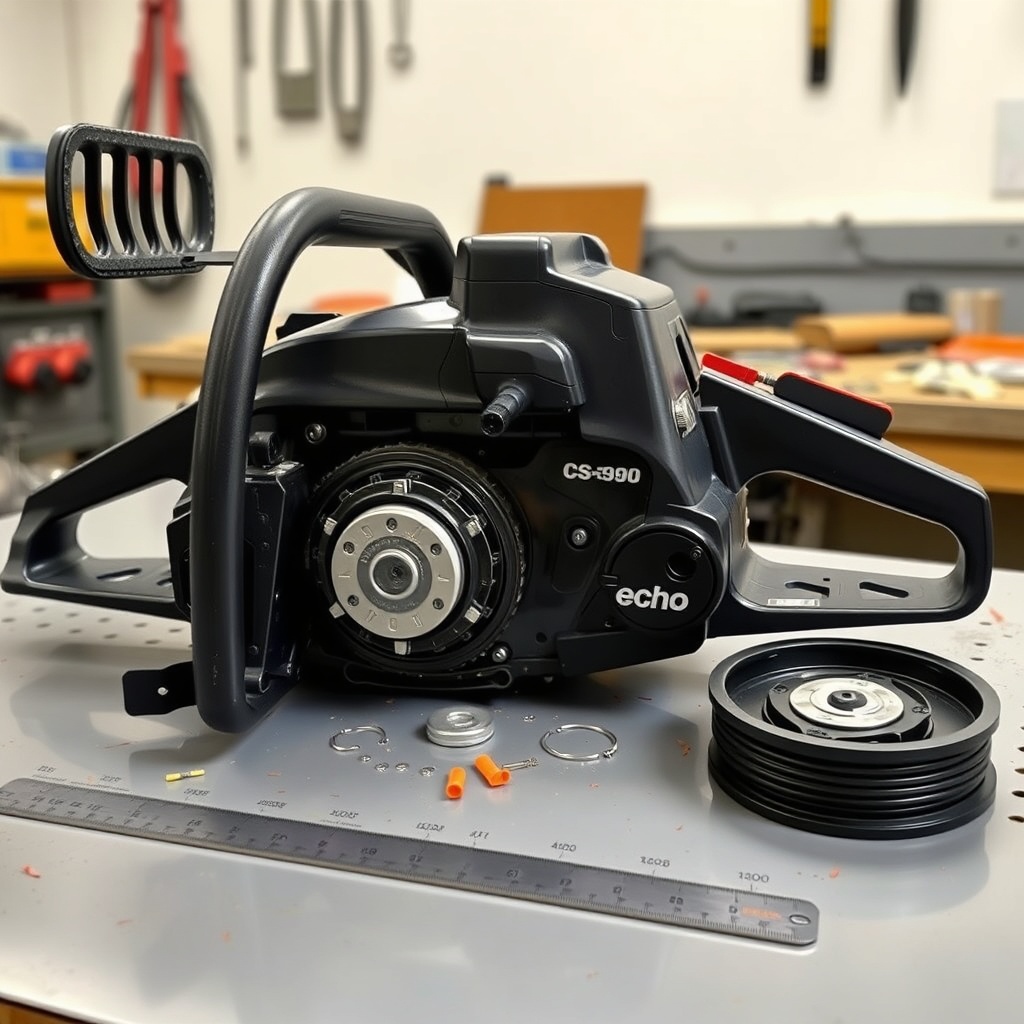
What Tools and Parts Do I Need for an Echo CS-590 Timber Wolf Chain Brake Replacement?
Successful replacement requires specific tools and genuine Echo or high-quality aftermarket parts. Using incorrect parts can compromise safety and performance. Below is a comprehensive list.
Tools Required:
- T27 Torx screwdriver (for brake band band retaining screws)
- 12mm socket or wrench (for bar nuts)
- Flat-head screwdriver (for prying off brake cover clips)
- Chain brake removal tool (or large flat-head screwdriver) to compress the brake return spring during reassembly
- Needle-nose pliers
- Safety glasses and work gloves
- Piston stop tool (to secure crankshaft during clutch removal)
- Strap wrench or clutch removal tool (if accessing the clutch drum)
Parts Required:
| Part | Echo Part Number | Estimated Price (USD) | Notes |
|---|---|---|---|
| Chain Brake Band Assembly (includes band and spring) | A040-000-110 | $45 – $65 | OEM Echo is recommended for safety-critical component. |
| Brake Cover/Actuator Assembly (if separate) | A040-001-180 | $30 – $50 | Often sold separately from the band. |
| Chain Brake Spring (if not included) | X556-000-100 | $8 – $12 | High-tension spring; use extra caution. |
| Clutch Drum Assembly (if worn) | A042-001-020 | $35 – $60 | Inspect for grooving while brake is off. |
| Echo Bar Oil (32 oz) | 6500401 | $6 – $9 | Use after reassembly to lubricate new brake components. |
Prices reflect typical online retailers. Always confirm part numbers with your saw’s serial number.
How to Remove the Old Chain Brake on an Echo CS-590 Timber Wolf
Begin by ensuring the saw is completely cool and the chain is slack. Never attempt this repair with a hot engine or tensioned chain. Follow these steps carefully.
Step 1: Secure the Saw and Remove the Bar and Chain
- Remove the bar nuts (12mm) and lift off the side cover. Slide the bar and chain off the drive sprocket.
- Wipe off excess debris from the clutch area. Wear gloves—splinters are common.
Step 2: Access the Clutch Drum and Remove the Clutch Assembly
- Insert the piston stop tool into the spark plug hole to lock the crankshaft. Rotate the engine until you feel positive engagement.
- Use the clutch removal tool or a strap wrench to loosen the clutch hub counterclockwise. The clutch is left-hand threaded—turn it to the left (counterclockwise) to remove. Learn more about clutch removal techniques here.
- Lift off the clutch drum and retaining washer. Be careful not to lose the needle bearing inside the drum.
Step 3: Remove the Chain Brake Assembly
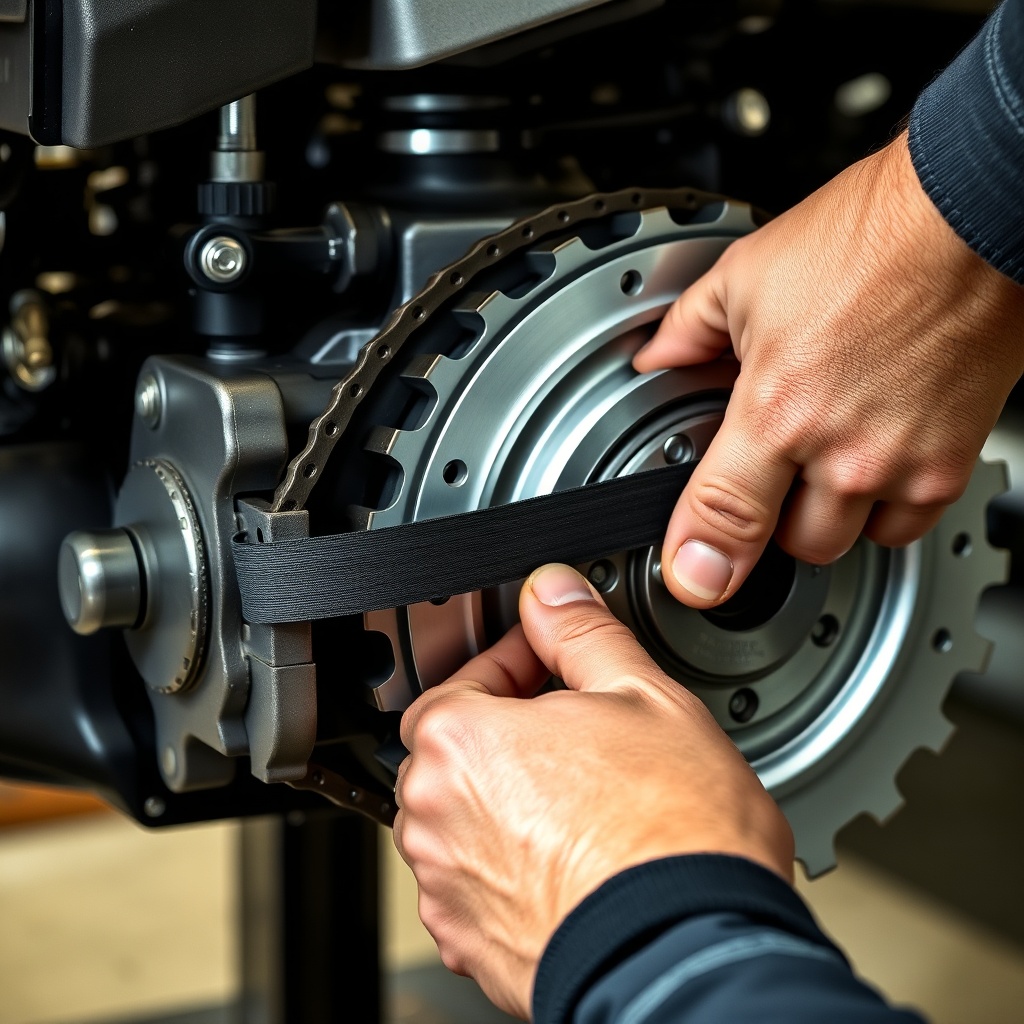
- Locate the two T27 Torx screws securing the brake band to the crankcase. One is near the front of the saw; the other is behind the actuator arm.
- Remove both screws. The brake band may stay attached to the actuator arm via a small clip. Use the flat-head screwdriver to gently pry the clip free.
- Slide the entire brake band and spring assembly off the crankcase. The actuator lever and brake cover can now be removed separately if needed.
- Inspect the brake pad surface for glazing. If the pad is shiny or cracked, replacement is mandatory.
If the actuator lever is stiff or broken, replace the entire brake cover assembly. See our guide on brake cover removal and inspection.
How to Install the New Chain Brake on an Echo CS-590 Timber Wolf
Installation is the reverse of removal, but requires precise alignment and spring tension. The brake return spring is under significant tension—use caution.
Step 1: Position the New Brake Band
- Align the brake band’s ends so they fit flush against the crankcase locating pins. The band must sit flat against the drum’s outer surface.
- Install the two T27 Torx screws. Torque to 3.5-4.5 Nm (31-40 in-lbs). Over-tightening can crack the band or strip the threads.
- Reattach the brake spring to the actuator arm. Use needle-nose pliers to hook the spring end into the notch. The spring should pull the actuator lever outward when released.
Step 2: Install the Actuator Arm and Brake Cover
- Slide the actuator lever onto the stud. Ensure the spring’s other end engages the cover’s recess.
- Align the brake cover over the studs. Press firmly until it snaps into place. You should hear a positive click.
- Manually cycle the brake lever (push it forward to engage, pull back to release) several times to ensure smooth operation. The lever should snap back to the released position quickly.
Step 3: Reinstall the Clutch Drum and Bar
- Apply a small amount of engine oil to the needle bearing inside the clutch drum. Slide the drum onto the crankshaft.
- Install the clutch assembly clockwise (tighten to 25-30 Nm / 18-22 ft-lbs). Remove the piston stop before tightening fully.
- Mount the bar and chain. Adjust chain tension to correct specifications.
Test the brake with the engine off before starting. The chain should stop within one second when the brake is engaged while idling.
What Owners Say About Echo CS-590 Timber Wolf Brake Issues
Owners of the Echo CS-590 Timber Wolf generally praise its power and value, but several report brake-related challenges. Common themes include the brake band wearing prematurely under heavy use and the actuator lever feeling stiff in cold weather. Many owners note that aftermarket brake pads last only 40-50 hours of cutting, while OEM Echo bands often exceed 100 hours. Users on forums recommend lubricating the actuator pivot point with dry silicone spray annually to prevent sticking. Those who cut in sandy or muddy conditions should inspect the brake every 20 hours. One owner described the brake replacement as “moderately difficult for a DIYer but straightforward with good instructions.” The consensus is that a functional chain brake is non-negotiable, and the CS-590’s design is serviceable with basic tools. For comparative data on brake performance across saws, visit our Echo CS-590 Timber Wolf Chain Brake System: How It Works & Testing Tips page.
Frequently Asked Questions
Q: How often should I replace the chain brake band on my Echo CS-590 Timber Wolf?
A: Inspect the brake band every 50 hours of operation. Replace it if the friction material is less than 2mm thick, cracked, or glazed. Heavy users should replace it annually as preventative maintenance.
Q: Can I use a chain brake from a different Echo model on my CS-590?
A: No. The CS-590 requires the specific A040-000-110 band assembly. Using a brake from another model may not engage properly or could jam the clutch drum.
Q: My chain brake won’t release after I engage it. What’s wrong?
A: This is usually caused by a broken return spring or seized actuator mechanism. Inspect the spring first—if it’s intact, clean and lubricate the actuator pivot. If the brake still sticks, the actuator arm may be bent.
Q: Do I need to remove the flywheel to replace the chain brake?
A: No. The chain brake is replaced from the clutch side only. Flywheel removal is not required.
Q: Is it safe to operate the saw if the chain brake feels loose but still stops the chain?
A: No. A loose brake lever may fail in a kickback scenario. Replace the brake assembly immediately. Safety components should never be compromised.
Q: What is the torque specification for the chain brake band screws?
A: Torque the two T27 screws to 3.5-4.5 Nm (31-40 in-lbs). Use a torque wrench to avoid stripping the threads or cracking the band.