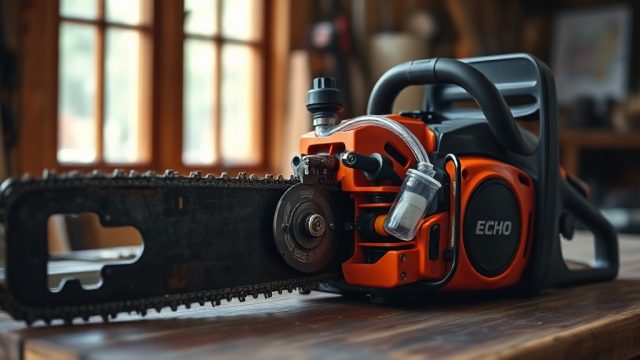
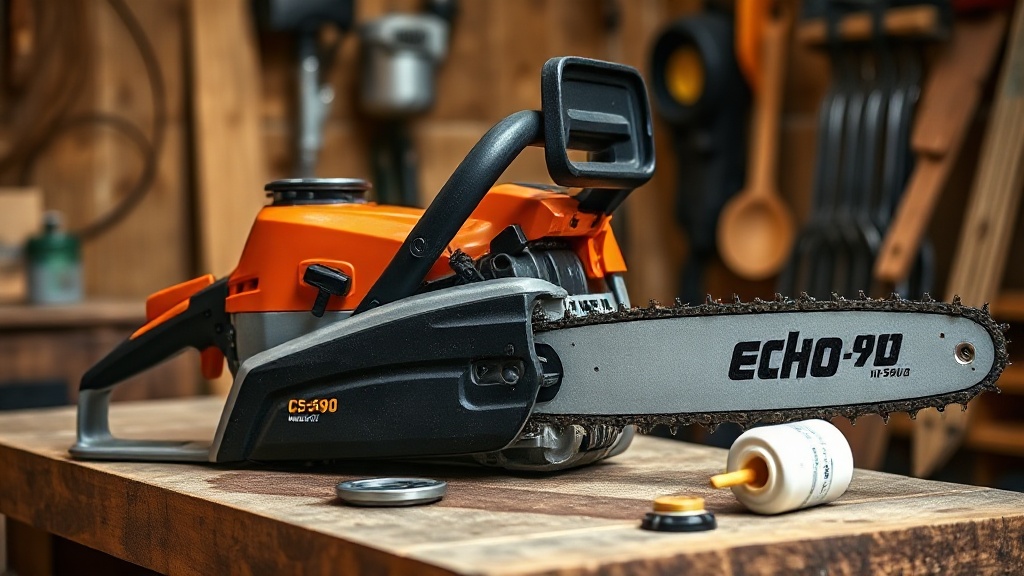
Introduction to the Echo CS-590 Timber Wolf Fuel Filter Replacement Guide
For owners of the Echo CS-590 Timber Wolf, a machine renowned for its 59.8 cc professional-grade power and affordability, a clogged or degraded fuel filter can turn a cutting session into a frustrating stall-fest. Replacing this small but critical component is a straightforward maintenance task that prevents poor engine performance, hard starting, and potential fuel system damage. This guide provides a step-by-step approach to restoring full fuel flow to the CS-590’s powerful engine, saving both time and money on professional repairs while ensuring reliable operation for years of firewood processing or land clearing.
Why Is My Echo CS-590 Timber Wolf Stalling or Surging?
The symptoms of a failing fuel filter in the CS-590 Timber Wolf are distinct yet often mistaken for carburetor or ignition issues. A restricted filter starves the engine of fuel under load, causing power loss when the chain is buried in a cut. Common indicators include the saw surging at idle, requiring excessive choke to start, or dying abruptly after running for 30 seconds. Before spending money on a rebuild kit, always check the filter—it’s the cheapest and easiest fix. A translucent fuel line allows visual inspection: if the filter material appears dark brown, matted, or visibly clogged with debris, replacement is overdue. The saw’s 3.71 hp engine demands clean fuel at 1.2 gallons per hour at full throttle, so even minor restriction reduces performance significantly.
What Tools and Parts Do I Need for a Fuel Filter Swap?
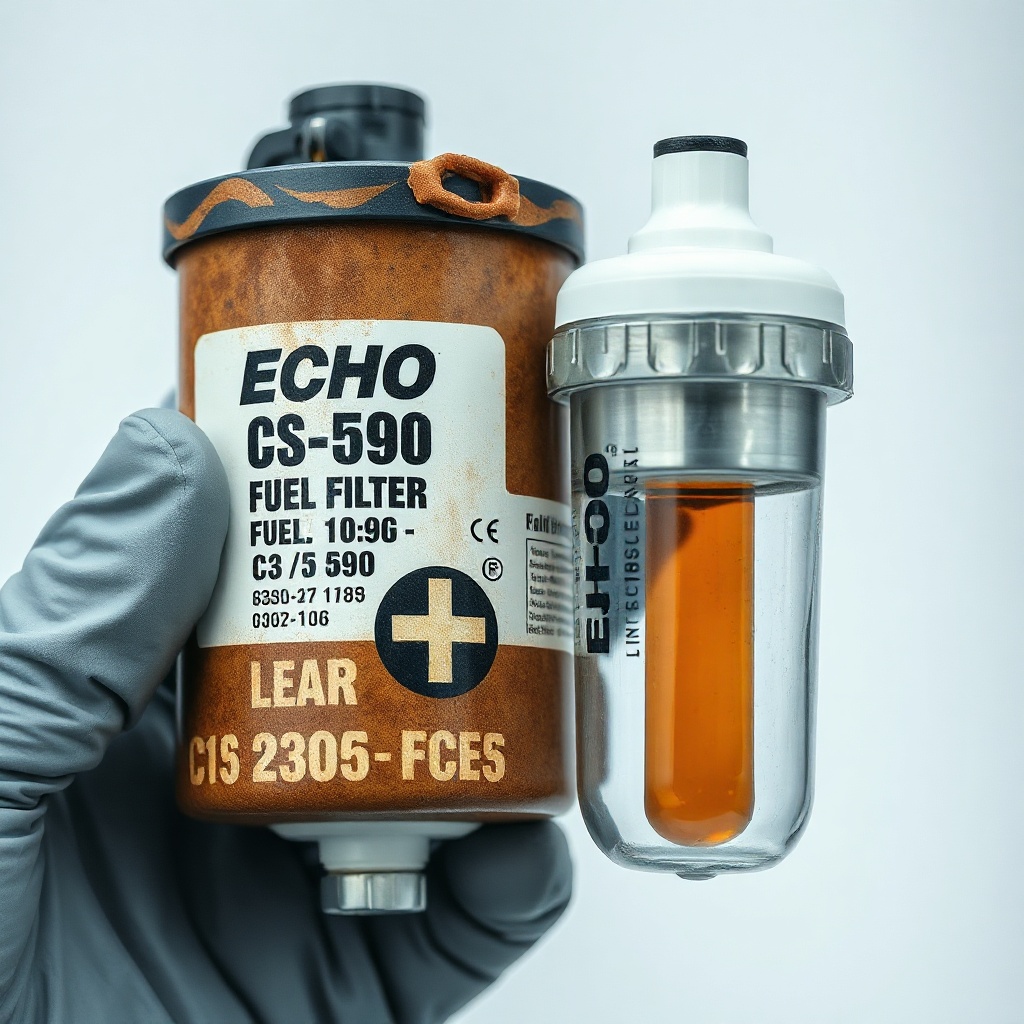
The operation requires minimal investment. A basic toolkit and a factory-spec filter ensure a 15-minute job. Echo part number A403-000130 is the recommended OEM replacement, costing approximately $8–$12 in local currency. Aftermarket equivalents are available for $2–$4 but may have slightly different flow rates. Essential tools include: a flathead screwdriver for loosening the fuel cap and air filter cover, a 3/8-inch or 10mm wrench to remove the recoil starter (if needed for access), needle-nose pliers to extract the filter from the tank, and a clean workspace to prevent debris contamination. Always keep a shop rag and small container handy to catch any fuel spillage.
| Item | Specification | Cost (USD) |
|---|---|---|
| OEM Fuel Filter | Echo A403-000130 | $8–$12 |
| Aftermarket Filter | Universal 5mm-6mm barb | $2–$4 |
| Fuel Line (if needed) | 3.2mm ID, 6.4mm OD | $5–$8 |
| Flathead Screwdriver | Standard | $2–$5 |
| Needle-Nose Pliers | Long reach | $8–$15 |
Note: Always use fresh fuel mixed at 50:1 with Echo Power Blend XT oil to minimize future filter clogging. A properly tuned oil system also prevents sawdust contamination of the fuel tank area.
How Do I Safely Access the Fuel Filter on a CS-590?
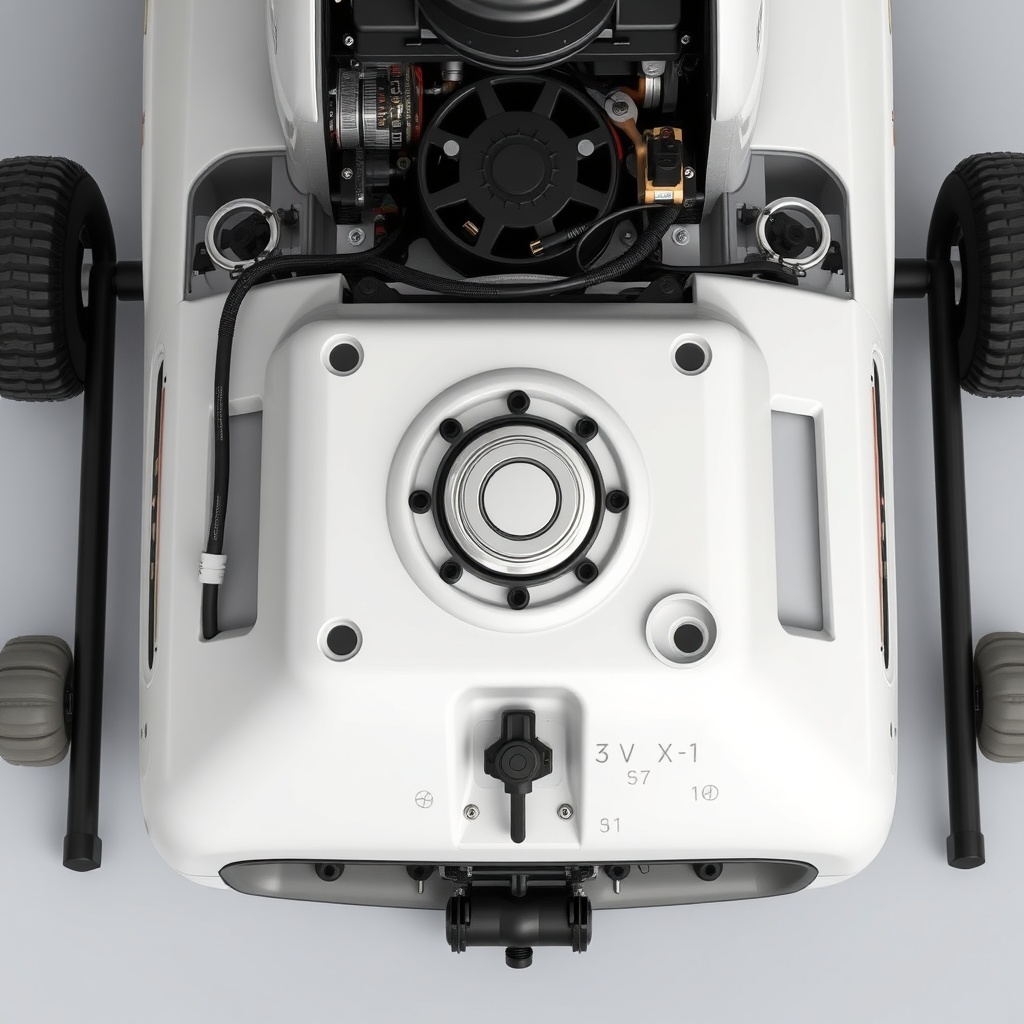
Safety first: ensure the engine is cold and the chain brake is engaged. Remove the spark plug cap to prevent accidental starts. Relieve fuel pressure by venting the gas cap—unscrew it slowly, then replace it loosely. The filter lives inside the fuel tank, accessible through the filler neck. On the CS-590, the fuel cap is a quarter-turn design; remove it completely. Use a flashlight to examine the tank interior. The filter sits at the bottom, attached to a short hose with a retaining clip. If the filter appears dislodged or floating, it may have come off the line. For saws with significant sawdust build-up around the fuel cap, brush clean the area before opening to prevent debris falling into the tank—a common cause of rapid filter clogging.
There are two access approaches: through the top (removing the recoil starter) or via the side. The simplest method is through the fill neck using long pliers, but if the line has retracted into the tank, the top-method works best. To use the top method, remove the four 10mm bolts securing the recoil starter assembly. Gently pull it off and set it aside without stretching the starter rope. The fuel tank cavity is now visible. A proper recoil starter replacement guide covers handling precautions if you need more detail.
What Is the Step-by-Step Process to Replace the Filter?
Follow this sequence for a reliable replacement without damaging the fuel line or tank:
- Step 1: Remove the spark plug cap and air filter cover. Clean the area around the fuel cap to prevent dirt ingress.
- Step 2: Using needle-nose pliers, gently fish the old filter out of the tank. Grasp the filter body, not the line, to avoid breaking the hose connection.
- Step 3: Once exposed, note how the filter attaches. The OEM filter has a barbed fitting that inserts into the fuel line. A small spring clip may secure it. Carefully pry the clip off with a flathead screwdriver.
- Step 4: Pull the old filter straight off the barb. If the line end appears cracked or swollen, trim 1/4-inch off the hose with a sharp utility knife. Damaged fuel lines can cause air leaks; see our comparison with the Stihl MS 261 for fuel system durability notes.
- Step 5: Install the new filter by pushing it firmly onto the barb until the clip snaps into the groove. Test the connection by gently tugging.
- Step 6: Drop the filter back into the tank. Reinstall the fuel cap and air filter cover. Replace the spark plug cap.
- Step 7: If you removed the recoil starter, reattach it carefully. Tighten bolts in a cross pattern to 40 inch-pounds (4.5 Nm) to avoid cracking the housing.
Prime the saw by pressing the bulb pump until fuel visible in the line. Start and allow to idle for 30 seconds before cutting. The surging and hard-starting symptoms should vanish.
How Often Should I Replace the Fuel Filter on the CS-590 Timber Wolf?
Echo recommends inspecting the fuel filter every 50 hours of operation or each season, whichever comes first. In practice, heavy users processing firewood with the 20-inch bar may need replacement every 25 hours if using stored or ethanol-blended fuel. Ethanol attracts moisture and creates gum deposits that rapidly clog the felt-style filter. For occasional users cutting 10-20 cords annually, a yearly replacement is sufficient. Always check the filter if the saw sits unused for more than three months—stale fuel residue hardens on the felt, reducing flow. A buying guide review emphasizes that the CS-590’s fuel system is robust when well-maintained.
What Can Cause a Rapidly Clogged Fuel Filter on the CS-590?
If a new filter clogs within a few hours, suspect contamination sources. The most common culprit is the fuel itself—using old or low-quality gas with high ethanol content (over 10%) dissolves rubber components and leaves varnish. A dirty fuel can is another vector: always use a dedicated container with a fine-mesh spout. When fueling the CS-590, wipe the fuel cap area clean first. Internal debris from a failing rubber fuel line can also flake off; inspect the line flexibility—cracked or brittle lines should be replaced using the oil pump replacement guide for similar routing techniques. A clogged carburetor inlet screen can mimic a bad filter, but the filter is always the first and cheapest diagnosis.
What Owners Say
CS-590 Timber Wolf owners on forums and review sites consistently praise the saw’s value, but the fuel filter is a common service point. Jon M. from Oregon notes: “I change the filter every spring—$10 saves me an hour of frustration trying to start it. I use ethanol-free gas now and the filter looks clean after 40 hours.” Another user, Carl, reports: “After 3 months of heavy cutting, my saw started surging. The filter was black and matted. A $6 aftermarket part fixed it instantly. This saw starts easier than my friend’s Stihl 391 after the swap.” A minority of owners complain about the filter’s location being a bit tight, but most agree the process is simpler than on competitive saws. One caution: aftermarket filters sold in bulk packs may have weaker barbs that pull off; OEM filters are worth the slight cost premium for reliability.
Frequently Asked Questions
1. Can I run the CS-590 without a fuel filter in an emergency?
No. Operating without a filter introduces debris directly into the carburetor, causing irreparable damage. The saw will run rich and stall. Always replace a missing or damaged filter before use.
2. What size is the fuel line on the Echo CS-590 Timber Wolf?
The line is 3.2mm inner diameter and 6.4mm outer diameter. Both OEM and universal 5mm-6mm barb filters work. Measure the barb diameter if using aftermarket parts.
3. How do I test if my CS-590 fuel filter is clogged without removing it?
Disconnect the fuel line at the carburetor and observe flow into a container. A healthy filter should deliver a steady stream; a clogged filter produces drops or no flow. Expect 20-30 ml per minute through the filter.
4. Will a bad fuel filter cause the chainsaw to smoke?
Indirectly, yes. A clogged filter leans the fuel mixture, causing the engine to run hot and potentially burn oil differently. Excessive blue smoke usually indicates oil issues; check the ignition coil testing guide if misfire accompanies smoke.
5. Is the Echo CS-590 fuel filter universal across models?
Not exactly. The CS-590 uses a specific barb and felt size. Filters from smaller Echo saws (like the CS-310) have a narrower barb and will not seal. Always verify part number A403-000130 compatibility.
6. Can I clean and reuse a clogged fuel filter instead of replacing it?
No. The felt material traps microscopic particles and cannot be effectively cleaned. Even ultrasonic cleaning risks leaving residue. A $10 replacement is far cheaper than a carburetor rebuild.