
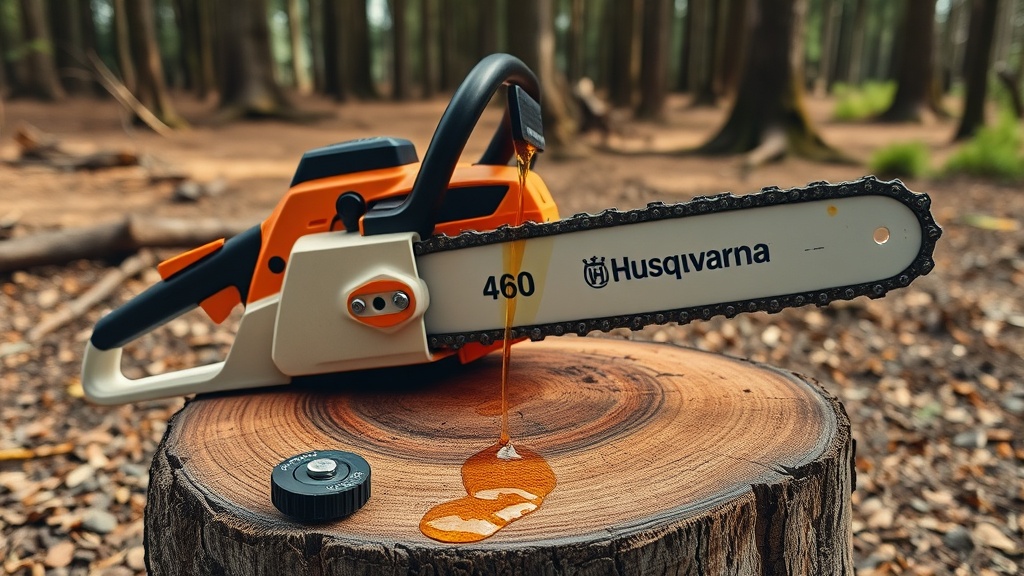
Husqvarna 460 Rancher Bar Oil Viscosity: What You Need to Know
Selecting the correct bar oil viscosity for your Husqvarna 460 Rancher is a surprisingly critical aspect of chain and bar maintenance that many operators overlook. While the saw is a rugged workhorse for firewood and land clearing, using the wrong oil weight can accelerate wear on the guide bar, chain, and pump components. This guide breaks down viscosity recommendations, seasonal adjustments, and common pitfalls to keep your 460 Rancher cutting smoothly for years.
Why Does Bar Oil Viscosity Matter for the Husqvarna 460 Rancher?
Bar oil does far more than lubricate the chain. It also cools the bar rails, dissipates heat from the drive sprocket, and flushes sawdust from the groove. Using an oil that is too thin at high temperatures results in excessive oil fling-off and inadequate lubrication, leaving the bar and chain to run dry. An oil that is too thick in cold weather struggles to flow through the pump, starving the chain and causing premature wear on the sprocket nose. For the Husqvarna 460 Rancher, which features an adjustable oil pump, viscosity directly impacts delivery rate and system longevity. Proper oil selection ensures consistent lubrication across the 18- to 24-inch bar lengths common on this saw.
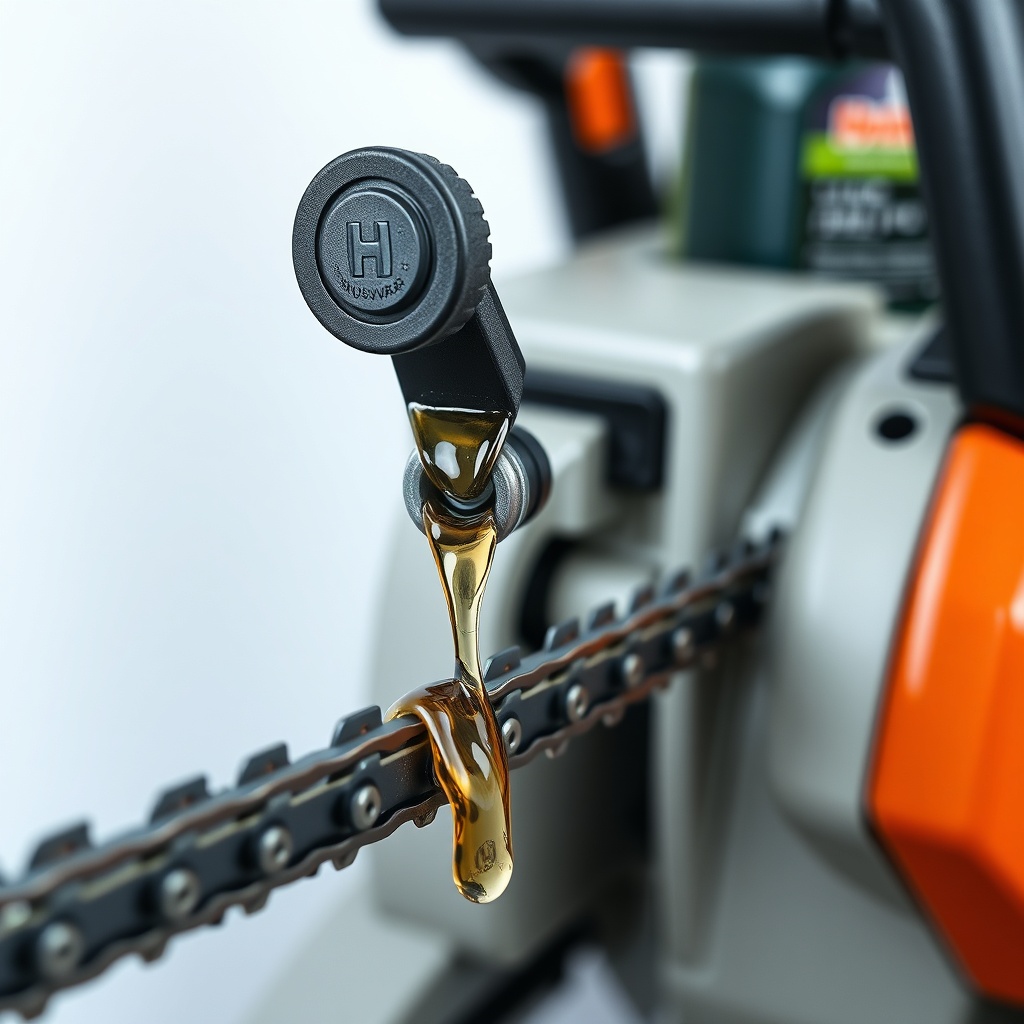
What Are the Recommended Bar Oil Viscosities for the Husqvarna 460 Rancher?
Husqvarna recommends using a dedicated bar and chain oil, typically ISO VG 100 to VG 150 (SAE 30 to SAE 40) for most ambient temperatures. The specific viscosity grade depends on the working environment. Below is a detailed specification table for common operating conditions:
| Ambient Temperature | Recommended Viscosity | ISO Grade | Typical Behavior on the 460 Rancher |
|---|---|---|---|
| Below 0°C (32°F) | Thin (e.g., SAE 10W or winter-grade bar oil) | ISO VG 32-46 | Flows easily through pump; minimizes cold-start starve; low fling-off at low chain speeds. |
| 0°C to 20°C (32°F to 68°F) | Medium (e.g., SAE 30) | ISO VG 68-100 | Good balance of adhesion and flow; typical for spring/fall use. |
| 20°C to 40°C (68°F to 104°F) | Heavy (e.g., SAE 40 or SAE 50) | ISO VG 150-220 | Reduces fling-off at high RPM; maintains film on bar rails under heavy load. |
| Above 40°C (104°F) | Extra Heavy (e.g., SAE 60 or specialized hot-weather bar oil) | ISO VG 320 | Maximum adhesion for sustained cutting; requires adjusting pump flow upward. |
Always verify that the oil is labeled “bar and chain oil” to ensure tackifiers and anti-wear additives are present. Motor oil or hydraulic fluid lack the necessary cling properties and can damage the pump seals.
How Does Bar Oil Viscosity Affect the Adjustable Oil Pump on the 460 Rancher?
The Husqvarna 460 Rancher comes with an adjustable oil pump that allows the operator to increase or decrease flow using a screwdriver slot on the underside of the saw. Viscosity directly influences this adjustment: thin oils require the pump to be set to a lower number (1-2) to avoid over-lubrication and waste, while thick oils often need a higher setting (3-4) to deliver enough volume. If you switch from a SAE 30 to a SAE 50 without adjusting the pump, you may see a significant drop in oil delivery. The opposite situation—using a thin winter oil with the pump set high—causes rapid tank emptying and excessive chain throw-off. For detailed pump tuning steps, reference the Husqvarna 460 Rancher Bar Oil Pump Adjustment: A Step-by-Step Guide.
What About Bio-Based and Synthetic Bar Oils for the 460 Rancher?
Environmentally conscious operators often ask about biodegradable or synthetic bar oils. For the Husqvarna 460 Rancher, both options work well but come with distinct viscosity characteristics. Bio-based oils (often canola or rapeseed derivatives) tend to be slightly thicker than petroleum equivalents at the same SAE grade, meaning they cling better but may gum up the pump if left idle for extended periods. Synthetic bar oils are engineered to maintain a consistent viscosity across a wider temperature range, which is valuable if you cut in varying climates. Husqvarna’s own Bio Advanced oil (ISO VG 100) is a reliable choice for most users. However, avoid blending different oil types in the tank, as this can cause additive incompatibility and clog the oil filter.
How Do You Properly Check Bar Oil Flow on the Husqvarna 460 Rancher?
Verifying correct flow is a five-second test that prevents catastrophic bar damage. After filling with the appropriate viscosity oil, start the saw and hold it over a clean surface (a piece of cardboard or light-colored wood). Run the chain at full throttle for 30 seconds—the oil should produce a steady stream of fine droplets or a thin line about 2-3 inches from the bar tip. If you see no oil after 20 seconds, the pump may be clogged or the viscosity too high. If a puddle forms immediately, the oil is too thin or the pump setting is too high. Always check the oil level in the tank; the 460 Rancher holds approximately 0.42 liters (14.2 fl oz). For best results, integrate this test into your pre-cutting routine alongside Husqvarna 460 Rancher Chain Brake Inspection and Adjustment Guide.
What Happens If You Use the Wrong Viscosity Bar Oil?
Using an incorrect viscosity can lead to several specific failure modes on the 460 Rancher. With oil that is too thin, you risk insufficient lubrication on the bar rails, leading to heat buildup and eventual “bar rail burn”—a blue discoloration from friction. This accelerates chain stretch and increases the likelihood of a derailment. With oil that is too thick at low temperatures, the pump struggles to prime, causing the chain to run dry for the first 10-20 seconds of operation. This can also stress the oil pump drive mechanism. Severe cases may result in clutch spring damage due to excessive drag, a topic covered in the Husqvarna 460 Rancher Clutch Spring Replacement Guide. Additionally, incorrect bar oil viscosity can mask or worsen symptoms of a worn chain brake system—refer to the Husqvarna 460 Rancher Chain Brake Inspection and Adjustment Guide for cross-referencing.
What Owners Say About Bar Oil Viscosity on the 460 Rancher
Experienced users on forestry forums and saw repair groups consistently emphasize that the 460 Rancher is tolerant of viscosity variations within a specific range. Many owners running an 18-inch bar use Husqvarna’s standard bar oil (ISO VG 100) year-round if they are in moderate climates. Those felling in northern latitudes report switching to Husqvarna’s winter-grade oil below -5°C (23°F) to prevent pump starvation. A repeated observation is that the adjustable pump is a key feature—several owners note that they mark the pump setting on the saw body for summer and winter positions after learning the hard way. One mechanic shared that 80% of early bar failures on the 460 Rancher can be traced to using multi-weight motor oil instead of dedicated bar oil. For users pairing their saw with specific bar and chain combinations, the viscosity must match the chain pitch—skip chains with larger gullets (e.g., .404 pitch) require heavier oil to stay wet. The Husqvarna 460 Rancher Bar and Chain Combinations: Best Pairings for Your Needs guide offers complementary advice.
Frequently Asked Questions
Q1: Can I use regular motor oil in my Husqvarna 460 Rancher bar oil tank?
A: No. Motor oil lacks tackifiers that help the oil cling to the chain at high speed. It also has different viscosity behavior under shear and can contain detergents that damage the pump seals. Always use a dedicated bar and chain oil.
Q2: How do I know if my bar oil is too thick for the current temperature?
A: If the saw’s chain does not receive oil within 15 seconds of full throttle at startup, or if the oil stream appears as irregular globs instead of a fine mist, the oil is likely too thick. Switch to a lower viscosity grade or winter oil.
Q3: Does bar oil viscosity affect chain tension on the 460 Rancher?
A: Indirectly. Poor lubrication from using too-thin oil causes the bar rails to heat up, which can expand the bar and change chain tension. However, oil viscosity itself does not directly alter chain slack. Always check tension before each use.
Q4: Is Husqvarna’s branded bar oil worth the price compared to generic brands?
A: Generally yes, if you want guaranteed viscosity stability and tackifiers. Third-party oils labeled “bar and chain oil” that meet ISO VG 100–150 are often acceptable, but avoid bargain blends with unknown additive packages. The 460 Rancher’s pump can handle most reputable brands.
Q5: Can I mix different bar oil brands or viscosities in the tank?
A: It is not recommended. Different oils have different additive packages that may react, causing sludge or gumming. If you must mix, use the same base type (petroleum with petroleum, bio with bio) and top off with the thickest viscosity in the tank.
Q6: How often should I clean the bar oil filter on the 460 Rancher?
A: Every 10 hours of operation or after emptying 5 tanks of oil, whichever comes first. Thick oils or bio-based oils tend to leave more residue inside the tank, which can clog the pickup filter. A simple visual inspection and rinse with diesel fuel keeps the system flowing.