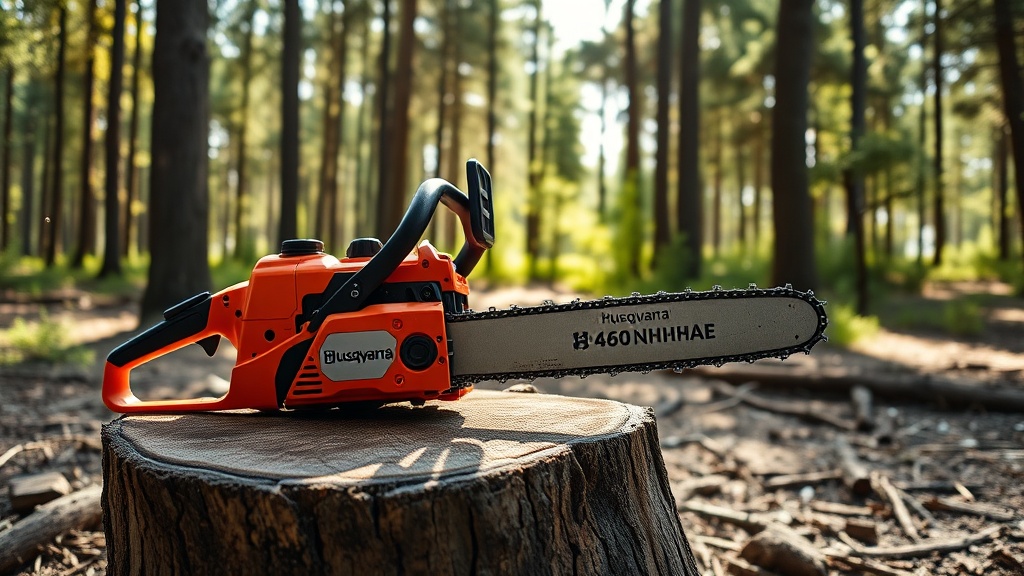
Why Is Chain Brake Inspection Critical for the Husqvarna 460 Rancher?
The chain brake is arguably the most important safety device on any chainsaw, and the Husqvarna 460 Rancher is no exception. This mechanical stop system is designed to halt the chain’s rotation instantly during a kickback event, preventing catastrophic injury to the operator. Regular inspection and adjustment ensure this failsafe mechanism functions precisely when milliseconds matter most. A neglected brake can become sluggish or fail entirely, turning routine cutting into a high-risk operation. This guide focuses on keeping your 460 Rancher’s chain brake in peak condition, emphasizing ergonomics and safety.
Many owners of the Husqvarna 460 Rancher Kickback: Safety Features & User Tips article understand the brake’s role in reactive situations. However, proactive inspection is equally vital. Over time, dust, bar oil residue, and heat can affect brake band tension or the brake handle’s movement. This isn’t a complex procedure; with basic tools and a methodical approach, you can verify and adjust the brake mechanism yourself. Let’s break down the essential steps.
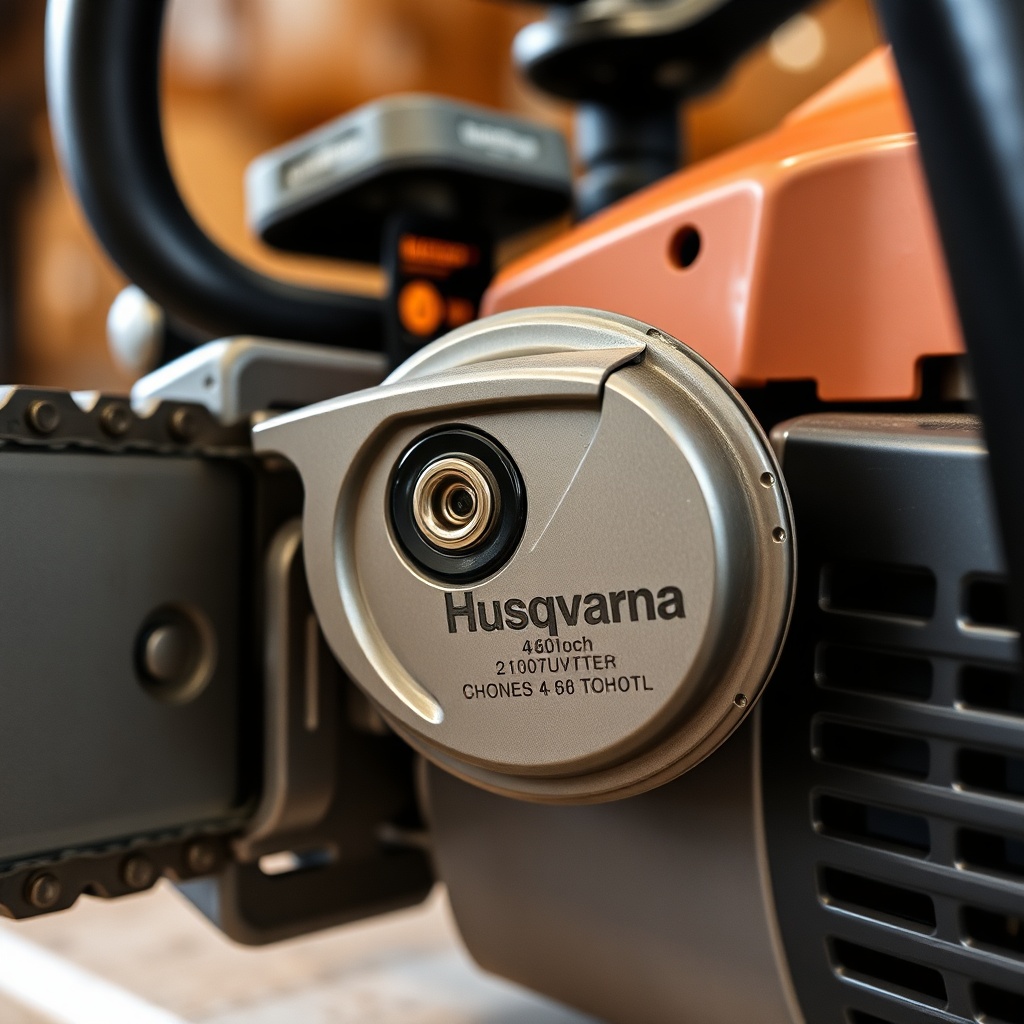
How Do I Test the Chain Brake Function on My Husqvarna 460 Rancher?
Before any adjustment, you must confirm whether the brake actually needs tuning. A simple field test requires only the saw itself. Start by ensuring the engine is off and the spark plug cap is disconnected for absolute safety. Place the saw on a stable surface, like your workbench or a clean stump. With the chain properly tensioned (refer to our How to Properly Tension the Chain on a Husqvarna 460 Rancher guide for this), manually move the brake handle—the large, curved lever in front of the top handle—into the engaged (forward) position. You should hear a distinct click, and the brake band should clamp down on the clutch drum.
Next, attempt to rotate the chain by hand. If the brake is functioning, the chain should NOT move at all—it should be firmly locked. If you can rotate the chain even a quarter turn, the brake engagement is weak. Now, release the brake by pulling the handle rearward toward the top handle. You should again hear a click, and the chain should spin freely. Any hesitation, grinding noise, or incomplete release indicates debris, wear, or misadjustment. Perform this test every time you fuel up the saw. It takes ten seconds and can save thousands in medical bills.
What Tools Do I Need for Chain Brake Adjustment on the 460 Rancher?
Adjusting the chain brake on the Husqvarna 460 Rancher is a low-tool task. You will not need a full workshop setup. Gather these items:
- Safety gloves – Protect your hands from sharp chain teeth and hot engine components.
- Flathead screwdriver – A medium-sized screwdriver is needed to pry off the clutch cover if it’s stuck, and to possibly adjust the brake band tension screw (if your model has an external adjuster).
- T20 Torx bit (or T25) – Older 460 Rancher models use Torx screws for the clutch cover; newer ones use a 13mm socket. Check your saw.
- 13mm socket wrench (or combination wrench) – To remove the bar nuts and clutch cover.
- Clean rag – Wipe off heavy grime before inspection.
- Brake cleaner (optional) – To degrease the brake band and clutch drum area if needed.
All these items are common in any saw owner’s toolbox. If you encounter stubborn parts, consult the Husqvarna 460 Rancher Carburetor Adjustment & Tune-Up Guide for general disassembly tips, though the brake adjustment is physical, not carburetor-related.
Step-by-Step: How to Adjust the Chain Brake on a Husqvarna 460 Rancher
Let’s walk through the adjustment process. Always work with a cool engine and disconnected spark plug. This ensures no accidental starting.
- Remove the bar and chain. Loosen the two bar nuts (usually 13mm) on the clutch cover. Pull the clutch cover off. CAUTION: The chain brake mechanism is integrated into the clutch cover and the main body. Handle it gently.
- Visually inspect the brake band. The brake band is a steel strap wrapped around the clutch drum. Look for cracks, glazing, or excessive wear (thinning). If the band is worn down to less than 0.5mm thickness, replace it immediately. Do not attempt to adjust a worn-out band.
- Check the brake handle mechanism. With the clutch cover removed, operate the brake handle (the lever on the top handle). It should move smoothly forward and rearward. Listen for a distinct snap or click. If it feels sloppy or gritty, the internal spring may be weak or the pivot point is dirty.
- Adjust the brake band tension (if adjustable). On the Husqvarna 460 Rancher, the tension adjustment is often internal. Look for a small stud or screw located on the clutch cover (inside, near the brake band mount). Some models have a hex screw; others use a flathead. Turn it clockwise to tighten the band (increase friction), counterclockwise to loosen. The goal: the band should grip the drum firmly when the brake is engaged but release completely when disengaged. There’s a specific clearance: typically 0.5mm to 1mm between the band and drum when released. If you can’t find an adjuster, the brake is likely a fixed-tension unit, meaning replacement is the only option if it’s out of spec.
- Reassemble and test. Reattach the clutch cover, tighten bar nuts, and re-tension the chain. Then perform the manual test from the first section. The chain should lock solid when brake is on, spin free when off.
If after adjustment you still have free play, the brake band itself is worn. Replacement bands are inexpensive (approx. $15–25 USD). This is a routine maintenance item. For a complete bar-and-chain removal guide, see our Husqvarna 460 Rancher Chain Tensioner Replacement Guide—the process is similar.
Common Chain Brake Problems: Severity & Solutions Table
Below is a quick-reference table to diagnose chain brake issues on the 460 Rancher. The severity scale ranges from 1 (minor) to 5 (critical safety).
| Problem | Severity (1–5) | Likely Cause | Solution |
|---|---|---|---|
| Brake handle sticks in engaged position | 3 | Dirt or debris in brake hand lever pivot; worn spring | Clean pivot with brake cleaner; if spring is weak, replace brake handle assembly |
| Brake handle moves but chain doesn’t stop | 5 | Worn brake band; incorrect band tension | Adjust tension screw or replace brake band |
| Brake engages spontaneously during cutting | 4 | Loose brake handle; vibration pushing brake lever forward; broken brake spring | Inspect brake handle retention; tighten or replace spring |
| Intermittent brake release failure | 4 | Debris in clutch drum area; glazed brake band | Clean drum and band with brake cleaner; replace band if glazed |
| Brake feels “mushy” or doesn’t click | 3 | Broken brake spring; loose internal linkage | Inspect and replace spring; check linkage pins |
| Chain continues to spin after brake engaged (slow creep) | 5 | Band not fully contacting drum; worn drum surface | Adjust band; if drum is scored, replace clutch drum assembly |
Any issue ranked severity 4 or 5 demands immediate attention—do not operate the saw. For routine cleaning tips, the Husqvarna 460 Rancher Fuel Filter Replacement: Step-by-Step Guide is unrelated but covers general maintenance practices that keep your saw clean.
What Owners Say About Chain Brake Reliability on the 460 Rancher
Long-time users of the Husqvarna 460 Rancher frequently praise its robust brake design, but they also note that it requires regular attention. One owner from a firewood forum stated: “I’ve had my 460 for three seasons. The brake kicked in during a nasty kickback when I hit a knot. It saved my arm. But after two years, the lever started getting sticky. A quick disassembly and clean fixed it.” Another user emphasized: “Don’t ignore the click. If it doesn’t click loudly, something’s wrong. I had to tighten the band a quarter turn after a heavy cutting day.”
Ergonomically, many appreciate the large brake handle, which is easy to operate even with thick gloves. However, a common complaint is that the brake handle can sometimes be accidentally bumped during limbing. This is a design trade-off for safety—a long lever is easier to engage quickly. Owners recommend positioning the saw carefully during use and using the chain guard when not cutting. Several users also replace the brake band every two seasons as preventive maintenance, especially if they cut hardwoods regularly. The consensus: the 460 Rancher’s chain brake is reliable if you’re willing to inspect it monthly.
Frequently Asked Questions About Husqvarna 460 Rancher Chain Brake
1. Can I adjust the chain brake without removing the bar and chain?
No. You must remove the clutch cover to access the brake band and adjustment screw. Attempting to adjust from outside is impossible and could damage the mechanism. Always follow the disassembly steps for proper access.
2. How often should I check the chain brake on my 460 Rancher?
Perform a manual test (engaging and releasing the brake) before every use. A full inspection with removal of the clutch cover is recommended every 10 hours of operation, or after any significant kickback event. Many owners do this during each chain sharpening session.
3. What is the cost to replace a chain brake band for the Husqvarna 460 Rancher?
An OEM Husqvarna replacement brake band costs approximately $18–25 USD (€16–22 EUR). Aftermarket bands are cheaper but may not offer the same durability. Labor cost at a shop is about $30, but DIY replacement takes only 15 minutes.
4. Why does my chain brake keep wobbling or feel loose?
This usually indicates a worn pivot pin or a loose brake handle mounting screw. Check the two small screws holding the brake handle to the top handle. Tighten to 4 Nm (3 ft-lb). If the handle still wobbles, the plastic housing may be cracked—replace the handle assembly.
5. Will a chain brake adjustment affect chain tension adjustment?
No. The chain brake and chain tension are independent systems. However, a correctly tensioned chain is crucial for brake efficiency. A loose chain can cause the brake to engage slower. Always ensure chain tension is correct per our Husqvarna 460 Rancher for Tree Felling: Pros, Cons & Tips guide before testing the brake.
6. Can I use WD-40 on the chain brake mechanism?
Avoid WD-40 or any penetrating oil on the brake band or clutch drum. It can reduce friction and cause brake failure. Use only dry brake cleaner or compressed air for cleaning. Lubricate only the pivot points with light machine oil, being careful not to contaminate the band.