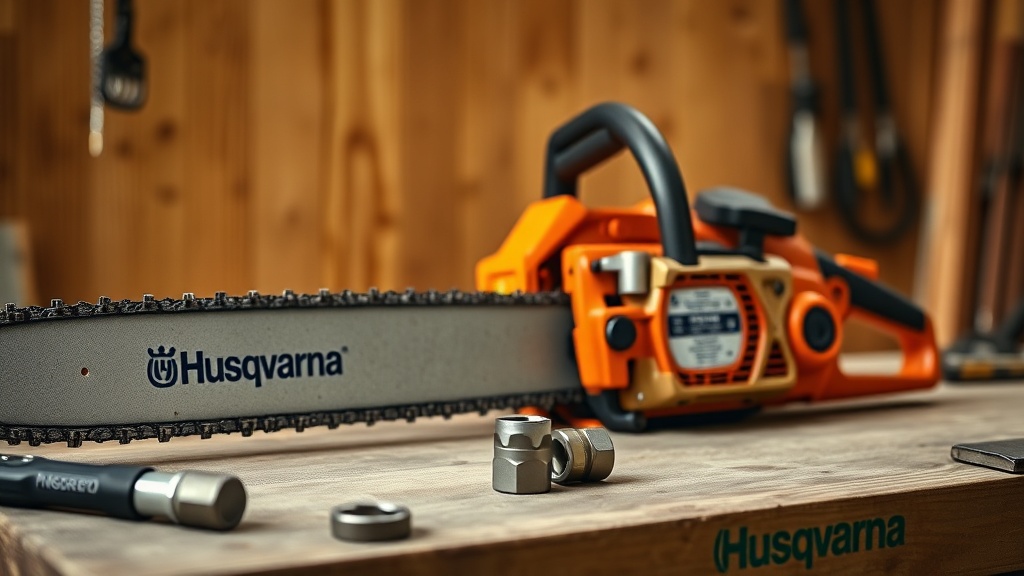
What Is the Correct Bar Torque Spec for the Husqvarna 460 Rancher?
The bar clamp nuts on a Husqvarna 460 Rancher should be tightened to a range of 35–40 Nm (25–30 ft-lb). This figure is critical: too low, and the bar vibrates loose during cutting, creating a dangerous kickback risk. Too high, and you risk stripping the threads on the studs or cracking the bar mount cover. A calibrated torque wrench is strongly recommended for this task, as hand-tightening alone cannot guarantee consistent clamping force across both nuts.
If you’re replacing the bar or chain, always follow the sequence outlined in our Husqvarna 460 Rancher Bar Mount Torque Specs & Tightening Sequence guide to avoid warping the bar slot.
What Sequence Should You Use When Tightening the Bar Mount Nuts?
The tightening sequence for the two bar clamp nuts is simple but mandatory: tighten the inboard nut (nearest the chain sprocket) first to 20 Nm (15 ft-lb), then the outboard nut to 20 Nm. Repeat the process until both reach the final spec of 35–40 Nm (25–30 ft-lb). Never fully torque one nut without the other—this creates uneven pressure on the bar slot and can cause the bar to tilt under load.
- Step 1: Finger-tighten both nuts.
- Step 2: Inboard nut to 20 Nm.
- Step 3: Outboard nut to 20 Nm.
- Step 4: Repeat each nut to 35–40 Nm.
- Step 5: Check chain tension; tighten if needed.
How Often Should You Check Bar Torque on the 460 Rancher?
Check bar torque every time you refuel or after every 2–3 hours of heavy cutting. The Rancher’s Husqvarna 460 Rancher Vibration Dampening System Analysis reveals that prolonged vibration can gradually loosen clamp nuts even if initially torqued correctly. For professional users cutting hardwood daily, a quick check at the start of each session is wise. A loose bar not only reduces cutting efficiency but also accelerates wear on the chain, sprocket, and oil pump gear.
If you notice the chain drifting to one side or strange noises from the bar area, stop immediately and verify torque with a wrench.
What Are the Consequences of Incorrect Bar Torque?
Running the bar too tight can warp the bar rails, crack the plastic chain cover, or strip the aluminum threads in the crankcase. Running it too loose can cause the bar to jump off the studs, chain derailments, and even throw the chain at high speed. The table below summarises the risks associated with each torque scenario:
| Torque Condition | Bar Rail Damage | Chain Hazard | Oil Leak Risk |
|---|---|---|---|
| Under-torque (<25 Nm) | Bar wobbles, rail bends | Derailment, kickback potential | Oil seeps at bar slot |
| Over-torque (>45 Nm) | Rail pinch, bar cracks | Chain seizes, overheat | Less oil flow to bar |
| Correct torque (35–40 Nm) | Even wear, long life | Safe, consistent tension | Proper lubrication |
Remember that the bar oil pump pressure also interacts with torque: proper clamping ensures the oil outlet aligns with the bar groove. For more on pump tuning, see Husqvarna 460 Rancher Bar Oil Pump Adjustment: A Step-by-Step Guide.
What Tools Are Required for Bar Torque Maintenance?
You will need a 15-mm socket or combination wrench (size may vary slightly on older models), a torque wrench capable of 20–50 Nm (15–37 ft-lb), and a flat-blade screwdriver or T25 Torx key (if your saw uses a clutch cover with a retaining screw). A bar groove cleaner is optional but recommended for removing debris before retorquing. Always use a calibrated torque wrench—beam-type wrenches are less accurate than click-type digital models.
- 15-mm socket (or 9/16″ imperial alternative)
- Torque wrench (20–70 Nm range)
- Bar tool (for chain tension)
- Bar groove scraper
For chain maintenance between torque checks, consult our Husqvarna 460 Rancher Chain Sharpening Guide: Angle & Depth Gauge Tips.
What Owners Say About Bar Torque on the 460 Rancher
Owners of the 460 Rancher report—almost universally—that the factory torque setting (35–40 Nm) works perfectly for both standard and heavy-duty bars. Many note that after a few tankfuls, the bar nuts tend to loosen by about 5 Nm due to thermal cycling and vibration. Seasoned firewood cutters recommend using a torque wrench at least once a month, especially if the saw sees mixed fuel or high-rpm limbing. A common complaint is that the plastic chain cover can crack if the outboard nut is over-torqued past 45 Nm—users who have replaced the cover after over-tightening strongly advise using a torque wrench every time. Several owners also mention that checking bar torque at the same time as adjusting bar oil flow (see Husqvarna 460 Rancher Bar Oil Viscosity: What You Need to Know) dramatically extends bar life.
Frequently Asked Questions
1. Can I use a regular socket wrench instead of a torque wrench?
You can, but you risk under- or over-torquing. A regular socket wrench gives no feedback—only a calibrated torque wrench ensures the correct 35–40 Nm (25–30 ft-lb) range.
2. How do I know if my bar clamp nuts are too loose?
A loose bar will feel wobbly when you grab the tip. You may also hear a metallic clatter or see the chain sagging unevenly. Stop the saw immediately and use a torque wrench to check.
3. What happens if I over-torque the bar nuts on a 460 Rancher?
Over-torque can strip the aluminum stud threads, crack the plastic chain cover, or pinch the bar rails. Replacement parts cost money and downtime—better to stay within spec.
4. Does bar torque affect chain oil flow?
Yes. Incorrect clamping can misalign the bar oil port, reducing lubrication. For precise adjustments, see Husqvarna 460 Rancher Oil Pump Replacement Guide: Step-by-Step Instructions.
5. Can I reuse the same bar clamp nuts indefinitely?
Yes, as long as the threads are not damaged or stripped. Inspect for galling or corrosion. Replace if the nut feels loose when finger-tight.
6. Should I lubricate the bar clamp studs?
A very light smear of anti-seize compound (copper- or nickel-based) helps prevent corrosion, especially in humid areas. Do not use oil—it can attract dirt and cause the nuts to spin beyond spec.