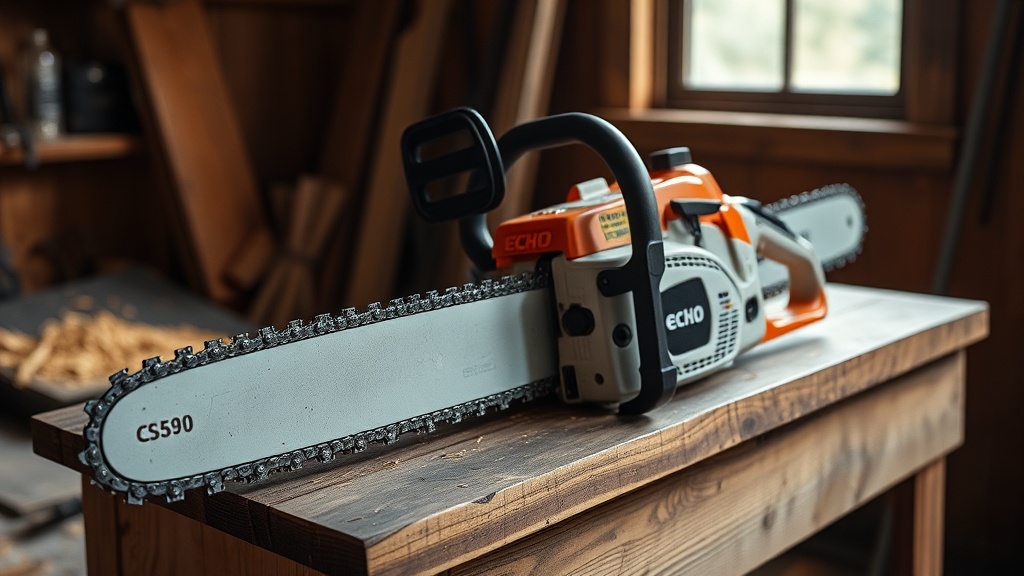
Why Would You Need to Replace the Bar on an Echo CS-590 Timber Wolf?
The Echo CS-590 Timber Wolf is a celebrated workhorse in the pro-sumer and semi-professional chainsaw market, offering a remarkable power-to-weight ratio and a displacement of 59.8 cc. However, after extensive hours of bucking, felling, or storm cleanup, the guide bar inevitably wears out. A worn bar can cause crooked cuts, excessive chain wear, and dangerous kickback risks. Replacing the bar is a straightforward but crucial maintenance step that every owner should master to keep their saw running safely and efficiently.
This guide provides complete step-by-step instructions for replacing the bar on your Echo CS-590 Timber Wolf. We’ll cover the necessary tools, safety precautions, and common pitfalls to ensure your chainsaw delivers peak performance for years to come. If you’ve already encountered a failing chain brake system, we recommend reviewing our companion Echo CS-590 Timber Wolf Chain Brake Replacement Guide before proceeding with bar work, as the brake assembly must be correctly engaged.
What Tools and Parts Are Needed for the Bar Replacement?
Before you begin, gather the following items to avoid mid-project interruptions. Using the correct tools prevents damage to the saw’s components and ensures a safe repair.
Required Tools
- Combination wrench (the one that came with your saw, typically 13mm and 19mm sizes)
- Flat-head screwdriver or spline driver (for tensioning if a tool is needed)
- Torque wrench (optional but recommended for precise bar nut tightening)
- Work gloves and safety glasses
- Rag or shop towel
Replacement Parts
- New guide bar (OEM Echo or aftermarket, 18″ to 20″ recommended for CS-590)
- New chain (unless reusing a sharp but compatible loop)
- Bar mounting hardware (nuts and washers, check for wear)
Most owners prefer an 18-inch bar for everyday tasks, while a 20-inch bar suits larger timber. The CS-590 accepts up to a 24-inch bar, but that can strain the clutch and oiling system. Always use a bar with the correct gauge (typically .050″ or .058″) and pitch (3/8″ low profile or standard).
If you suspect the chain brake needs servicing while the bar is off, now is an excellent time to inspect the mechanism. Our Echo CS-590 Timber Wolf Brake Band Replacement Guide walks you through that specific process.
Step-by-Step Bar Replacement Procedure
Follow these steps carefully. Always assume the saw’s engine is off, the spark plug cap is disconnected, and the chain brake is engaged (forward position) before touching the bar area.
Step 1: Secure the Saw and Remove the Bar Nuts
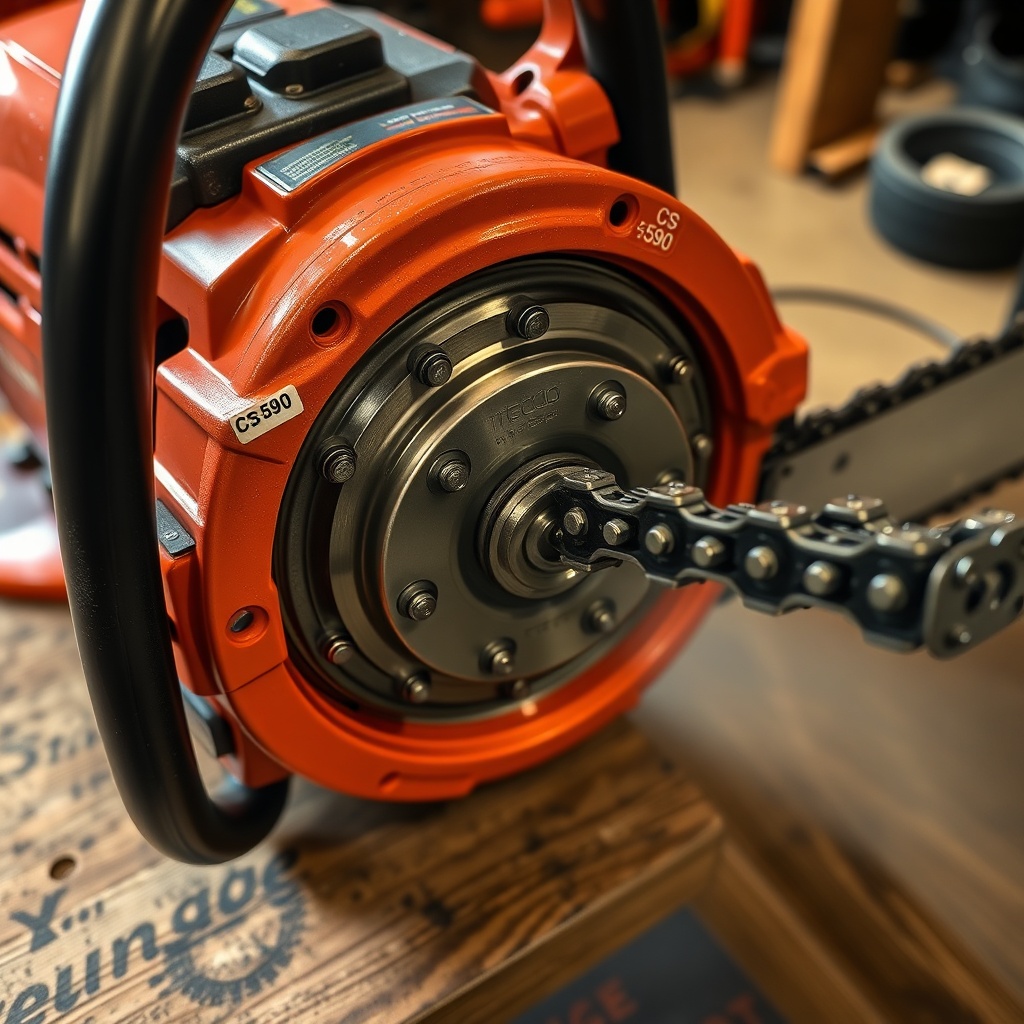
Place the chainsaw on a stable work surface with the clutch cover facing up. Using the combination wrench, loosen the two bar nuts that hold the clutch cover in place. Do not remove them completely yet—just loosen them enough to release tension on the clutch cover.
Step 2: Remove the Clutch Cover
Once the nuts are loose, lift the clutch cover off the studs. Set it aside in a clean area. You will now see the bar, chain, and sprocket.
Step 3: Remove the Old Bar and Chain
Slide the old chain off the sprocket and out of the bar groove. Lift the bar off the studs. Inspect the bar oiler hole and groove for debris. Clean the mounting surface thoroughly with a rag.
Step 4: Install the New Bar and Chain
Place the new bar onto the studs, ensuring the oiler hole aligns with the oil outlet. Drape the new chain around the sprocket and guide it into the bar groove. The cutting teeth should face toward the engine on the top run.
Step 5: Tension the Chain
Reinstall the clutch cover loosely. Tighten the bar nuts finger-tight. Use the tensioning screw (usually accessed through the side of the clutch cover) to adjust chain tension. The chain should rest snugly against the bar but pull freely by hand. Tighten the bar nuts to 18-20 ft-lbs (24-27 Nm) using a torque wrench.
Step 6: Check Operation
Spin the chain by hand to ensure it moves freely. Reconnect the spark plug, start the saw, and idle briefly. Check for smooth chain rotation and adequate oiling (visible on a cardboard test).
Torque Specifications and Chain Tension Table
Proper torque and tension are critical for safety and performance. Use this table as a quick reference for your Echo CS-590 Timber Wolf bar replacement.
| Component | Specification | Notes |
|---|---|---|
| Bar nut torque (OEM nuts) | 18-20 ft-lbs (24-27 Nm) | Use a torque wrench for repeatable results |
| Chain tension (drive side) | 0.5-1 mm clearance under bar | Chain should not sag, but pull freely |
| Bar length (recommended) | 18-20 inches | OEM Echo bars or high-quality aftermarket |
| Bar gauge | .050″ (1.3 mm) or .058″ (1.5 mm) | Match chain gauge exactly |
| Chain pitch | 3/8″ low profile or .325″ | Most common for CS-590 |
| Sprocket type | Rim or spur, 7-tooth standard | Upgrade to 8-tooth for faster cutting |
If you encounter a worn sprocket during bar replacement, replacing the clutch drum is straightforward. Our Echo CS-590 Timber Wolf Clutch Drum Replacement Guide covers the details.
What Owners Say
Experienced owners of the Echo CS-590 Timber Wolf consistently emphasize the importance of bar maintenance. On forums and review sites, several themes emerge:
- Durability: Many owners report the factory OEM bar lasts 2-3 years with regular use, but they recommend upgrading to an Oregon or GB bar for longevity.
- Oiling issues: A common complaint is that the stock oiler can be inconsistent. Several owners replace the bar and chain simultaneously to ensure even lubrication.
- Ease of replacement: The bar swap is considered one of the simplest maintenance tasks on the CS-590, with most users completing it in under 20 minutes.
- Cost factor: At the time of writing, a quality replacement bar costs between $35 and USD 65, while an OEM Echo bar runs about $50 to USD 70. Chains add another $20 to USD 40.
- Performance gains: Owners who pair a new bar with a sharp chain report a noticeable improvement in cutting speed and reduced vibration.
One user on a popular chainsaw forum noted, “I replaced my bar at 150 hours, and it felt like a new saw. The old bar had a slight banana curve I didn’t even notice until I put the new one on.”
Frequently Asked Questions
Q: Can I use a 24-inch bar on the Echo CS-590 Timber Wolf?
A: Yes, the CS-590 can handle a 24-inch bar, but it will strain the engine and oiler. Most owners recommend sticking to 18-20 inches for optimal performance. A longer bar may also require upgrading the clutch and sprocket.
Q: How often should I replace the bar on my CS-590?
A: Generally, replace the bar every 2-3 years or after 150-200 hours of use, depending on cutting conditions. Dirty or abrasive wood (e.g., pine with sand) will accelerate wear.
Q: Do I need to replace the chain when I replace the bar?
A: It is highly recommended. A new chain on a worn bar can cause poor tracking and early chain failure. Always match the chain gauge and pitch to the new bar.
Q: What torque should I use for the bar nuts?
A: Use 18-20 ft-lbs (24-27 Nm) for standard Echo bar nuts. Overtightening can strip the studs, while undertightening can cause the bar to shift during operation.
Q: My saw throws the chain after bar replacement. What’s wrong?
A: This usually indicates incorrect chain tension or a damaged bar groove. Check that the chain is properly seated, the tension is correct, and the bar’s rails are not burred. Also inspect the sprocket for wear.
Q: Should I lubricate the bar mounting studs or nuts?
A: No. Clean the studs and nuts with solvent, but do not apply grease or oil. Lubricants can prevent proper torque and attract sawdust, leading to corrosion or loosening.
For more advanced maintenance on your CS-590, explore our Echo CS-590 Timber Wolf Carburetor Adjustment & Tune-Up Guide to ensure your engine runs smoothly after bar work.