
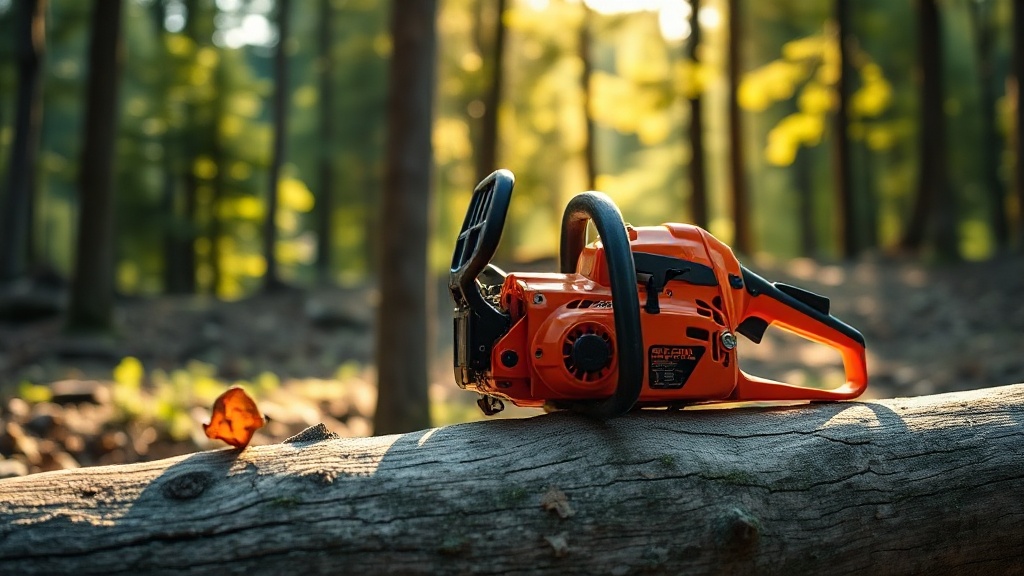
Echo CS-590 Timber Wolf Carburetor Adjustment & Tune-Up Guide
The Echo CS-590 Timber Wolf is a rugged, mid-displacement chainsaw revered by landowners and firewood cutters for its blend of power and durability. Proper starting procedure and carburetor tuning are critical to unlocking its full potential, as an incorrectly adjusted carburetor can lead to hard starts, poor performance, or engine damage. This guide walks through the essentials of starting the CS-590 and fine-tuning its carburetor for reliable operation under varying conditions.
How Do You Start the Echo CS-590 Timber Wolf for the First Time?
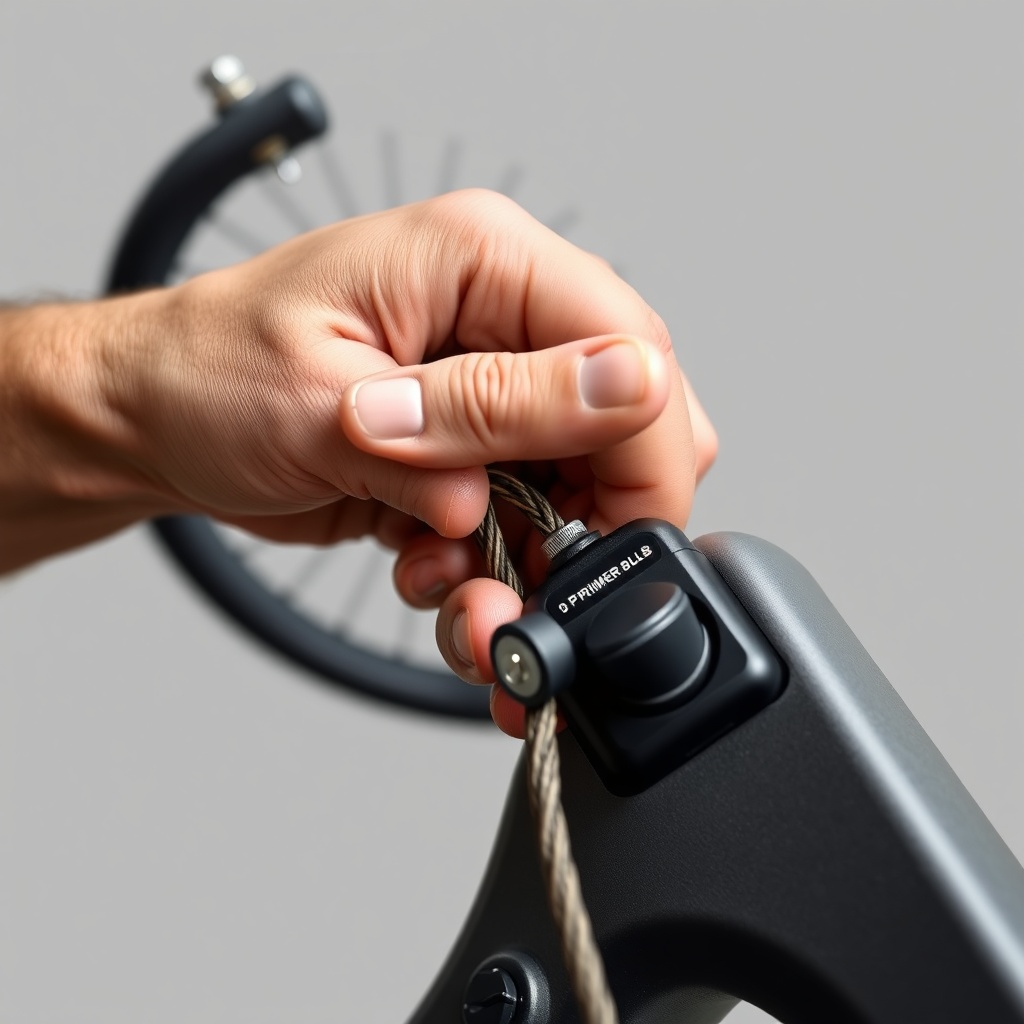
Starting a new Echo CS-590 Timber Wolf requires a sequence that primes the fuel system and avoids flooding. Begin by placing the saw on a flat, stable surface with the chain brake engaged. Set the master control lever (combination stop switch and choke) to the full choke position. Press the primer bulb six times until fuel is visible in the bulb. Pull the starter rope briskly until you hear the engine attempt to start (usually one to three pulls), then move the choke lever to the “run” position. Pull again—the engine should fire within two more pulls. Once running, allow a 20-second warm-up before disengaging the chain brake. If the saw fails to start, check for stale fuel; Echo recommends a 50:1 mix with ISO-L-EGD certified oil. For cold weather starting, owners often find that two extra primer bulb presses help vaporize cold fuel.
Always inspect the spark arrester screen for carbon buildup before tuning, as a clogged screen can skew carburetor behavior.
What Are the Symptoms of a Lean or Rich Mixture on the CS-590?
Carburetor adjustment on the CS-590 relies on two high-speed (H) and low-speed (L) screws. A lean mixture (too much air, not enough fuel) causes the engine to run hot, stall during acceleration, or produce a high-pitched screaming sound. A rich mixture (too much fuel) leads to sluggish throttle response, excessive smoke, and a wet, sooty spark plug. The CS-590’s chain brake system must be released before tuning, as engaged brakes add load that skews adjustments. A common mistake is tuning with a dirty air filter; always clean or replace the filter first—see the air filter comparison guide for OEM vs aftermarket options.
| Symptom | Cause | Severity | Immediate Action |
|---|---|---|---|
| Engine starts but dies at idle | Lean low-speed screw | Moderate | Turn L screw out 1/8 turn |
| Excessive smoke at idle | Rich low-speed mixture | Low | Turn L screw in 1/8 turn |
| Slow acceleration, bogging | Lean high-speed screw | High | Turn H screw out 1/8 turn; check fuel lines |
| Four-stroking at high RPM (surging) | Rich high-speed mixture | Moderate | Turn H screw in 1/8 turn |
| Overheating, melted piston | Severe lean condition | Critical | Stop immediately; rebuild carburetor |
How Do You Access and Adjust the Carburetor Screws on the CS-590?
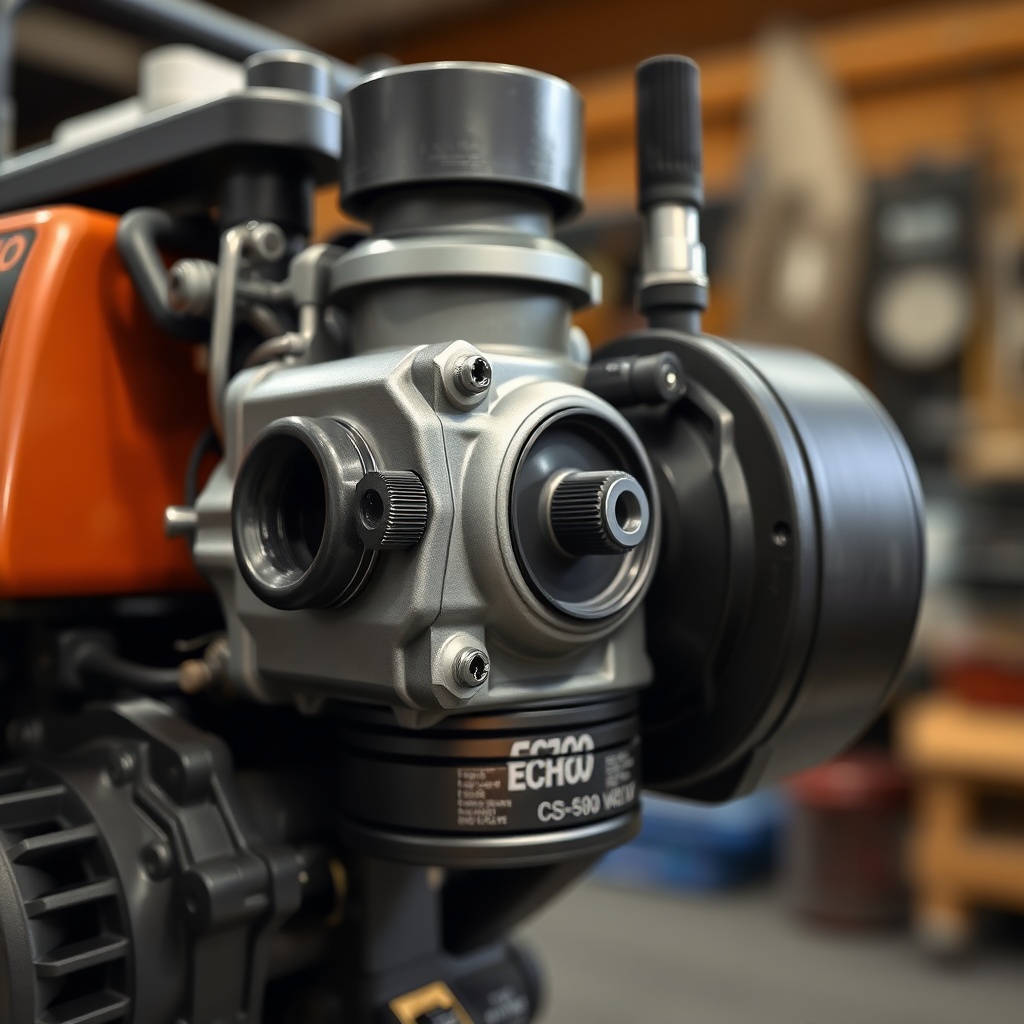
The Echo CS-590 Timber Wolf uses a Zama C1Q carburetor with two external adjustment screws—low-speed (L) and high-speed (H)—located behind a rubber plug on the top of the carburetor body. To access them, remove the air filter cover and air filter. Use a small flathead screwdriver. Factory default settings are 1 turn out from lightly seated for L and 1-1/8 turns out for H. Always turn screws while the engine is warm and at operating temperature. Begin with idle speed screw adjusted so the chain does not rotate at idle (around 2,800 RPM). Then, adjust L screw for smooth idle transition. For H screw, perform a “cut test” with a 20-inch bar buried in a log: the saw should reach maximum RPM without four-stroking. If you also plan to modify the exhaust, refer to the muffler modification guide for re-tuning steps after muffler porting.
How Does the Chain Brake Affect Starting and Tuning?
The chain brake on the CS-590 must be in the rear (disengaged) position during starting and carburetor tuning to avoid unnecessary drag. A engaged brake creates a load on the clutch and crankshaft, causing the engine to run differently and potentially mask tuning problems. If the chain brake fails to release or engages unexpectedly, check the brake band condition using the brake band replacement guide. A worn brake band can cause the chain to lock intermittently, which also alters carburetor idle behavior. During tuning, always start the saw with the chain brake disengaged and run it without the chain contacting wood to avoid RPM fluctuations.
What Is the Proper Starting Sequence After a Tune-Up?
After completing carburetor adjustments, verify starting reliability. Follow these steps: (1) Ensure master control is in “run” position. (2) Press primer bulb three times. (3) Set choke to full for cold starts, skip for warm starts. (4) Pull starter until first pop (1–2 pulls). (5) Move choke to half position (or run) and pull again—engine should start within two pulls. (6) Let idle 15–20 seconds before revving. If the saw stalls after tuning, the low-speed mixture may be too lean; open L screw an additional 1/16 turn. A common issue is the fuel cap vent clogging after tuning—check for vacuum by loosening the cap slightly; if RPM increases, replace the vent. For saws that still have starting issues, inspect the clutch drum for wear, as a binding clutch can mimic carburetor problems.
What Maintenance Should Accompany Carburetor Tuning?
Carburetor adjustments only work well if the rest of the saw is maintained. Replace the fuel filter annually. Clean the spark arrester screen every 25 hours using the dedicated spark arrester cleaning guide—a clogged screen restricts exhaust flow and richens the mixture. Inspect the air filter after every 10 hours of use; aftermarket filters may differ in airflow, requiring re-tuning. Chain brake components, including the brake band and clutch, should be checked for wear every season, as described in the chain brake replacement guide. A fouled spark plug (tan or black deposits) indicates the mixture balance is off—clean or replace with a NGK BPMR7A. Store the saw with a full tank of stabilized fuel to prevent ethanol-related carburetor varnish.
What Owners Say
Long-term owners of the Echo CS-590 Timber Wolf emphasize that carburetor tuning is a “set it and forget it” process once the initial break-in is complete (approximately five tankfuls). Many report that the factory settings are slightly rich for emissions compliance, and that leaned adjustments (1/8 turn in on both screws) improve throttle response and reduce smoke. Common praise includes the saw’s ability to idle smoothly for extended periods after tuning, a trait rare in its class. One owner noted that the primer bulb failed after three years of heavy use, causing hard starts, but replacement cost only $6.99. Criticisms center on the rubber plug covering the screws—it deteriorates under high heat, allowing dirt ingress. Owners recommend replacing this plug during each tune-up cycle. For those who modify the muffler, re-tuning is mandatory; feedback indicates a 10-15% power gain is possible with proper H screw adjustment, though the saw becomes louder. The consensus: the CS-590 is forgiving for DIY tuners, but always re-check tuning when switching from summer to winter fuel blends.
Frequently Asked Questions
Q: What are the factory carburetor settings for the Echo CS-590 Timber Wolf?
A: Low-speed screw (L): 1 turn out from lightly seated. High-speed screw (H): 1-1/8 turns out from lightly seated. Always confirm with a tachometer; target idle RPM of 2,800 and max RPM of 12,500.
Q: Can I adjust the carburetor without a tachometer?
A: Yes, but it’s risky. Use the “four-stroking” method: adjust H screw until the engine four-strokes at full throttle (rich), then lean it until the four-stroking just disappears. For L screw, adjust for fastest idle without the chain spinning.
Q: Why does my CS-590 stall when I tilt it sideways?
A: This indicates a lean low-speed mixture. Also check for a cracked fuel line or clogged tank vent. The carburetor diaphragm may need replacement if the saw is over three years old.
Q: How often should I tune the carburetor?
A: Only when symptoms appear, after major maintenance (air filter change, muffler mod), or when switching between summer and winter fuel. Routinely checking at 50 hours is good practice.
Q: Does using non-ethanol fuel affect carburetor tuning?
A: Yes. Ethanol-free fuel has a higher BTU content and may lean the mixture slightly; you may need to open both screws 1/16 turn. It also prevents carburetor gumming, which reduces tuning drift.
Q: What tool do I need for carburetor screws on the CS-590?
A: A standard 3mm flathead screwdriver. Aftermarket tools like the Echo “Tune-Up Kit” include a specialized driver, but any precision screwdriver works.