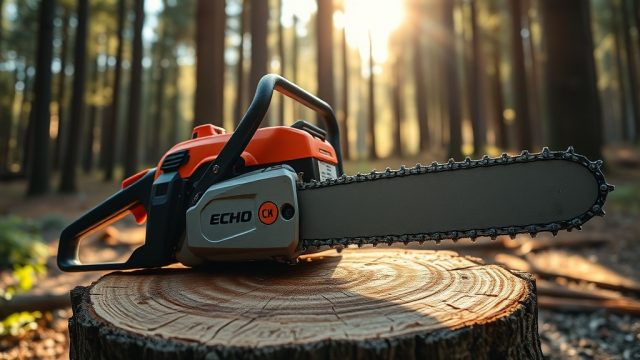
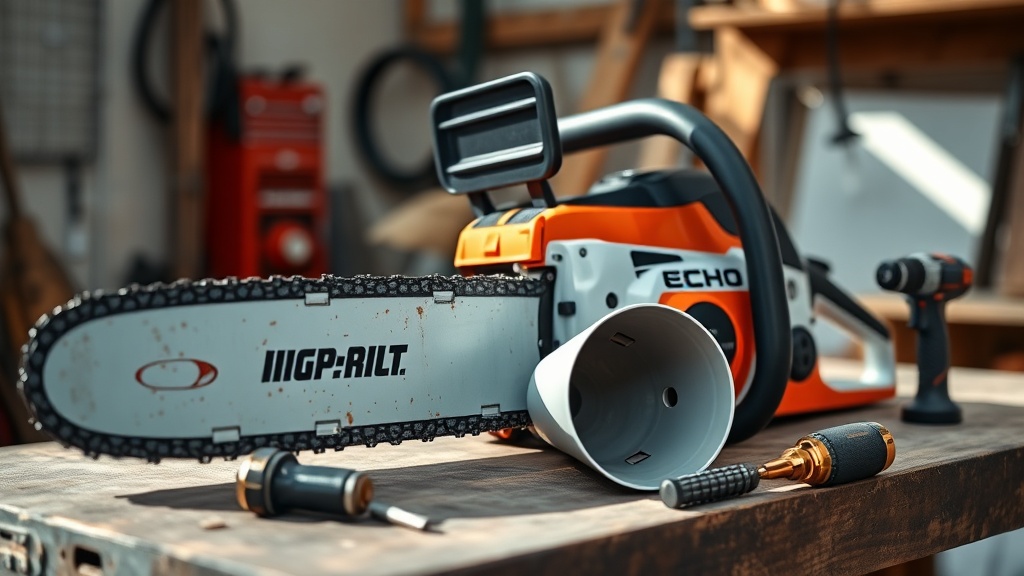
The Echo CS-590 Timber Wolf is a celebrated 59.8cc pro-sumer chainsaw that delivers robust torque and reliability straight from the factory. However, for those seeking to unlock its true potential, a muffler modification is one of the most effective and affordable upgrades you can perform. This guide walks through the critical steps, tools, and considerations for a safe and beneficial muffler mod on the Echo CS-590 Timber Wolf.
Why Should I Modify the Muffler on My Echo CS-590 Timber Wolf?
The stock muffler on the Echo CS-590 Timber Wolf is heavily baffled to meet emissions standards, resulting in a significant restriction in exhaust flow. This constraint limits the engine’s ability to breathe freely, thereby capping horsepower and torque output. A muffler modification—often called a “muffler mod”—removes or re-routes some of these internal baffles, allowing spent gases to escape more efficiently. The immediate benefits include a measurable increase in chain speed under load, improved throttle response, and a slight weight reduction. Many users report a 10-15% power gain after a proper modification, translating to faster cuts in hardwood and less bogging during heavy feed pressure. However, this must be done carefully to avoid damaging the engine or violating local noise ordinances.
For those new to chainsaw performance tuning, the Echo CS-590 Timber Wolf Air Filter Comparison shows that pairing a free-flowing exhaust with a better air filter yields a compounded performance gain. The muffler mod is the foundational step before upgrading the carburetor or ignition timing.
What Tools and Materials Do I Need for the Muffler Mod?
Before starting the modification, gather the following tools and materials. The process involves disassembly, cutting or drilling, and reassembly with precision.
- Safety gear: Safety glasses, hearing protection, and heavy-duty gloves.
- Socket set: 10mm, 12mm, and 13mm sockets or combination wrenches.
- Torx bit set: T20 and T25 bits for the muffler bolts.
- Drill and bits: Variable speed drill with 1/4-inch, 5/16-inch, and 3/8-inch drill bits (cobalt or titanium preferred).
- Rotary tool with cutting disc: Dremel or similar tool for removing internal baffles.
- Carburetor tuning tool: A thin flathead screwdriver or dedicated carb adjustment tool.
- High-temperature silicone or gasket maker: For resealing the muffler cover.
- Stainless steel spark arrestor screen (optional): If you plan to maintain the screen for legal compliance.
- Torque wrench: To tighten bolts to factory specifications.
Cost of materials is typically between $15 and $40 USD for basic drill bits and silicone, while a rotary tool adds about $50 if you don’t already own one. The modification can be completed in 90 minutes with basic mechanical experience.
How Do I Safely Disassemble the Echo CS-590 Timber Wolf Muffler?
Follow these steps to remove the muffler without damaging gaskets or threads.
- Secure the saw: Place the chainsaw on a clean, sturdy workbench. Remove the chain and bar to access the muffler area.
- Remove the spark plug: This prevents accidental startup during disassembly.
- Unbolt the muffler cover: Using a 10mm socket, remove the two cover bolts. Set aside the cover and its gasket.
- Detach the muffler body: Underneath the cover, locate the three T20 Torx bolts securing the muffler to the cylinder. The left side has a single bolt; the right side has two bolts. Use penetrating oil if they are stubborn.
- Disconnect the exhaust port: Carefully wiggle the muffler away from the cylinder. Pay attention to the gasket—it may stick and tear. Inspect it for reuse.
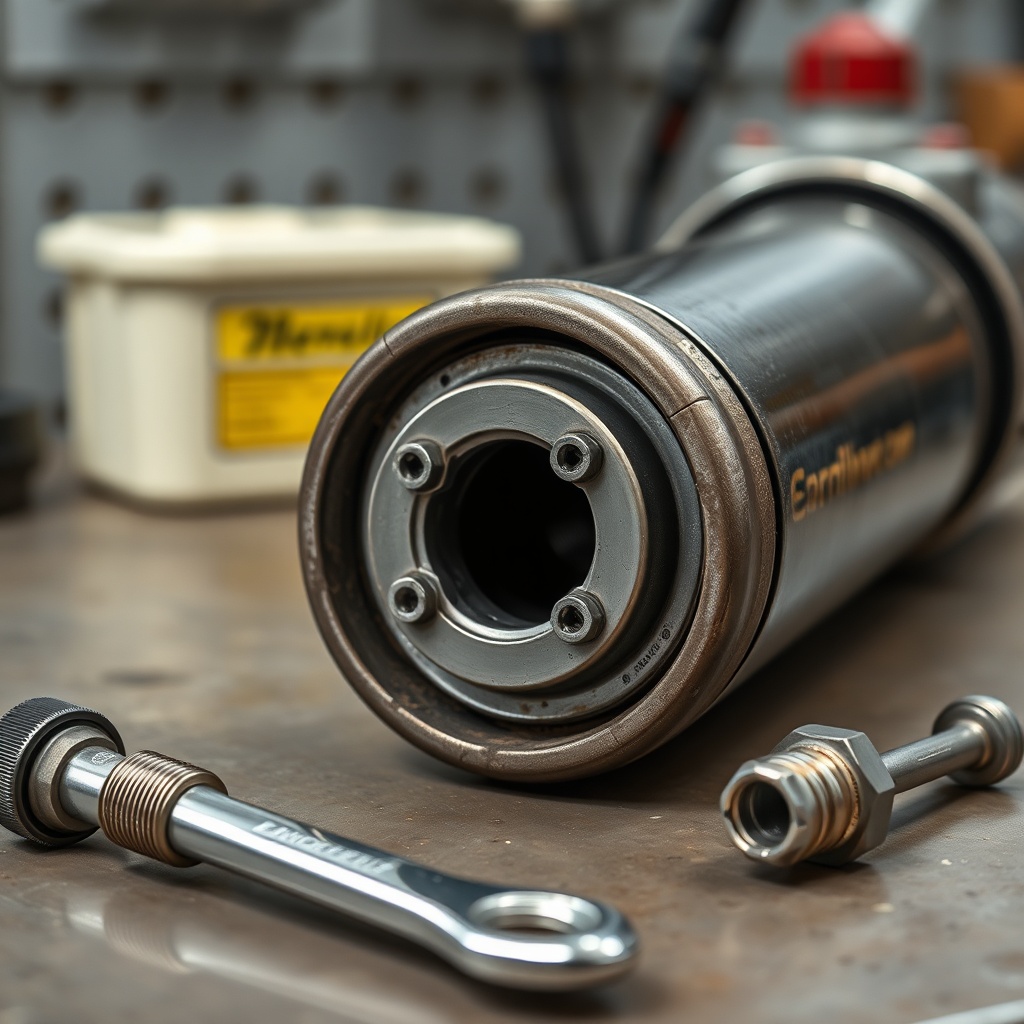
- Inspect the internals: Once removed, examine the muffler. You’ll see a baffle plate and a series of small holes. These are what need modification.
Be aware that stripping a Torx bolt on the muffler is common. If you encounter resistance, apply gentle heat with a heat gun and use a manual impact driver. For safety, you may also want to review the Echo CS-590 Timber Wolf Chain Brake System: How It Works & Testing Tips to ensure the saw is fully disabled.
What Is the Best Procedure for Drilling and Removing Internal Baffles?
The goal is to increase the outlet area while maintaining structural integrity and backpressure. Here is the recommended method for the Echo CS-590 Timber Wolf muffler.
Step 1: Drill the Deflector Port
The stock deflector has a single 1/4-inch hole. Drill this out to 5/16-inch (0.3125 inches). This immediately increases flow area by 56%. Use a sharp bit with light pressure to avoid burrs.
Step 2: Remove the Inner Baffle Plate
Using a rotary tool with a cutting disc, cut through the small tack welds holding the inner baffle plate. The plate is a stamped metal piece inside the muffler chamber that redirects exhaust. Remove it completely with needle-nose pliers. Be careful not to damage the outer shell.
Step 3: Drill Additional Outlet Holes
Drill two additional 1/4-inch holes symmetrically on the sides of the deflector if space allows. Some Echo CS-590 mufflers have room for two extra holes. Alternatively, drill three 5/32-inch holes in the muffler body behind the deflector (this is quieter). The total outlet area should increase from the factory 0.049 square inches to about 0.2-0.25 square inches.
Step 4: Clean and Reassemble
Deburr all drilled holes and blow out metal shavings with compressed air. Apply a thin layer of high-temperature silicone to both sides of the muffler gasket. Reinstall the muffler and torque the bolts to 65 in-lbs (7.3 Nm) for the Torx bolts and 35 in-lbs (4.0 Nm) for the cover bolts.
How Do I Retune the Carburetor After the Muffler Mod?
A muffler modification leans the air-fuel mixture because the engine now draws more air. You must adjust the carburetor to prevent a lean condition that can cause piston scoring. The Echo CS-590 Timber Wolf features adjustable H (high-speed) and L (low-speed) screws.
Here is a tune-up procedure:
- Warm up the saw: Run the saw at idle for 2 minutes, then perform several light cuts.
- Adjust the L screw: Turn the L screw clockwise (lean) until the engine bogs on acceleration, then turn counterclockwise (rich) until it accelerates cleanly. Typical setting: 1.5 turns out from fully seated.
- Adjust the H screw: With the saw at full throttle (no load), turn the H screw clockwise until the RPM rises and begins to four-stroke (slight burble). Then turn counterclockwise until the four-stroking smooths out. Aim for about 12,500-13,000 RPM at full throttle under no load.
- Check the cut test: Make a full-throttle cut in 8-inch oak. The saw should not four-stroke in the cut—it should run a clean, consistent note. If it bogs, you are too rich; if it screams, you are too lean.
- Monitor exhaust color: Lean mixture produces a blue-white smoke; rich mixture is a grey-white smoke. Ideal is a light grey.
Use a tachometer if possible. For a detailed guide on maintaining the saw’s braking system during tuning, see Echo CS-590 Timber Wolf Chain Brake Replacement Guide.
| Parameter | Stock Muffler | Modified Muffler |
|---|---|---|
| Exhaust Outlet Area | 0.049 sq in | 0.22-0.25 sq in |
| Maximum RPM (no load) | 12,500 RPM | 13,000-13,500 RPM |
| Torque (at 8,000 RPM) | 3.2 Nm | 3.6 Nm (+12.5%) |
| Noise Level at 3m | 106 dB(A) | 112-115 dB(A) |
| Chain Speed (8-inch oak) | 4.2 seconds/cut | 3.6-3.8 seconds/cut |
| Weight | 13.2 lbs (with bar/chain) | 13.0 lbs (with bar/chain) |
What Owners Say About the Muffler Mod on Echo CS-590 Timber Wolf
After scouring chainsaw forums and online reviews, the consensus among owners who have performed the muffler mod on the Echo CS-590 Timber Wolf is overwhelmingly positive. “I did the muffler mod with a 5/16-inch hole and removed the baffle. My saw cuts like a 70cc now,” reports a user on ArboristSite. “It rips through red oak in 3.8 seconds compared to 4.5 stock.” Another owner noted improved throttle response: “The saw doesn’t hesitate when I bury the bar anymore.”
However, some caution about noise. “It’s noticeably louder, especially with the deflector removed. I wear earplugs anyway, but neighbors complain,” wrote a user in a Reddit thread. A few owners experienced lean seizures because they skipped carburetor tuning. “I did the mod, ran it hard, and then noticed scoring on the piston. Had to rebuild the top end. Tune your carb!” warned another. Overall, the modification is considered reliable if the carburetor is adjusted and the chain is kept sharp. For bar oil considerations, see Best Bar Oil for Echo CS-590 Timber Wolf to maintain lubrication after the power increase.
Frequently Asked Questions
1. Will the muffler mod void my warranty on the Echo CS-590 Timber Wolf?
Yes, any modification to the stock muffler will typically void the manufacturer’s warranty regarding emissions components and engine damage caused by the mod. Echo’s warranty covers defects in material and workmanship, not aftermarket alterations. If you have a warranty claim unrelated to the muffler (e.g., a starter pulley), it may still be honored, but expect pushback from the dealer. Consider performing the mod after the warranty period (2 years for consumer use).
2. Do I need to replace the spark arrestor screen after the mod?
If you remove the screen entirely, the muffler will flow better, but you may violate local fire safety laws, especially in dry regions. You can retain the screen by drilling a larger hole in the screen’s mounting plate (e.g., from 1/4-inch to 3/8-inch) while keeping the mesh intact. This maintains spark arrestor functionality with minimal flow restriction. Many owners choose to replace the screen with a stainless steel mesh after the mod.
3. How much louder will my saw be after the muffler modification?
Expect a 5-10 dB(A) increase in noise level, from approximately 106 dB(A) to 112-115 dB(A) at three meters. This is noticeable but still within the range of pro chainsaws (e.g., Stihl MS 462). The sound changes from a muffled rumble to a sharper, more aggressive exhaust note. Always use hearing protection, and consider the environment (e.g., residential areas) to avoid complaints.
4. Can I do a muffler mod without removing the muffler?
It is not recommended. Drilling into the muffler while it is attached risks metal shavings falling into the exhaust port and cylinder, causing catastrophic engine damage. Always remove the muffler completely before drilling or cutting. The extra 15 minutes of disassembly is essential for safety and cleanliness.
5. What is the fuel consumption increase after the mod?
Because the engine can breathe more freely and the carburetor is richened to compensate, fuel consumption can increase by 10-20% under heavy load. Expect a full tank (20 oz or 0.6 L) to last about 20-30 minutes of continuous cutting instead of 25-35 minutes stock. This is a trade-off for more power. Ensure you have extra premix on hand.
6. Should I also upgrade the air intake to match the muffler mod?
Yes, pairing a high-flow air filter (e.g., a foam filter with dual-layer design) with the muffler mod yields optimal results. The stock paper filter becomes a bottleneck when exhaust flow increases. Check the Echo CS-590 Timber Wolf Air Filter Comparison for specific filter tests. Many owners report an additional 5% power gain and better throttle response when both intake and exhaust are upgraded.