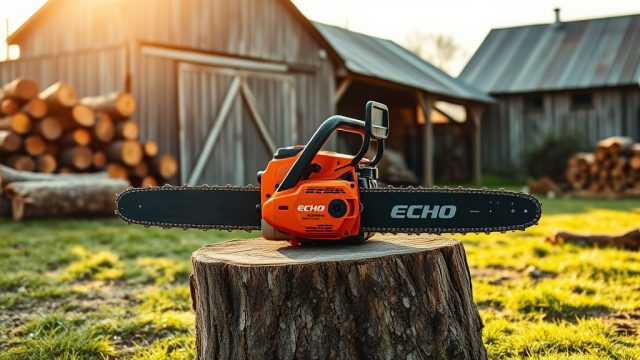
Why Is the Echo CS-590 Timber Wolf a Standout for Firewood Cutting?
For firewood cutters who need reliable, long-term power without the premium price tag of professional saws, the Echo CS-590 Timber Wolf has earned a fierce reputation. This 59.8cc backyard and farm saw delivers near-pro performance at a price that undercuts much of its competition. Below, SawSavvy breaks down exactly how this chainsaw performs when stacked against rivals, where it excels in firewood processing, and what common maintenance tasks owners should know.
How Does the Echo CS-590 Compare to Stihl and Husqvarna in Its Class?
The direct competitors for the CS-590 Timber Wolf are the Stihl MS 271 Farm Boss and the Husqvarna 450 Rancher. While the Stihl and Husqvarna have broader dealer networks and decades of brand loyalty, the Echo often wins on raw displacement and torque-per-dollar.
| Specification | Echo CS-590 Timber Wolf | Stihl MS 271 Farm Boss | Husqvarna 450 Rancher |
|---|---|---|---|
| Engine Displacement | 59.8 cc | 50.2 cc | 50.2 cc |
| Power Output | 4.3 hp (3.2 kW) | 3.6 hp (2.7 kW) | 3.5 hp (2.6 kW) |
| Weight (dry, without bar/chain) | 6.1 kg (13.5 lbs) | 5.6 kg (12.3 lbs) | 5.7 kg (12.6 lbs) |
| Fuel Capacity | 605 mL (20.4 oz) | 500 mL (16.9 oz) | 410 mL (13.9 oz) |
| Bar Length (recommended) | 50–61 cm (20–24 in) | 40–50 cm (16–20 in) | 40–50 cm (16–20 in) |
| Price (approx, UK market) | £420 – £480 | £500 – £580 | £470 – £550 |
The Echo’s 59.8cc engine gives it a tangible advantage when burying a 24-inch bar in seasoned oak or hickory. Firewood cutters who routinely handle logs above 45 cm (18 in) in diameter will notice the CS-590 pulls harder through the cut than the smaller-displacement Stihl and Husqvarna. However, the Echo is heavier, and its vibration levels are slightly higher than the Stihl MS 271. For homeowners processing three to five cords per year, the weight penalty is rarely an issue; for full-time loggers, the difference matters.
What Are the Best Uses for the Echo CS-590 Timber Wolf?
The CS-590 Timber Wolf shines in firewood cutting, especially when felling and bucking medium-to-large diameter hardwoods. Its high-torque, low-rpm design keeps the chain pulling even as the bar loads up. This saw is not ideal for pruning or light limbing—it’s too heavy for extended overhead work. Instead, owners should pair it with a 20-inch bar for a balanced combination of power and maneuverability. Many users report that the CS-590 handles 24-inch bars capably for horizontal bucking but struggles under vertical cuts in ultra-hard woods like ironbark. For chainsaw mill usage, owners should look at smaller displacement saws; the CS-590 can handle short slabs (under 30 cm width) but lacks the cooling and oiling capacity for sustained milling work.
Proper chain selection dramatically affects performance. For comprehensive advice on which chain suits your cutting style, see our guide on Echo CS-590 Timber Wolf Cutting Chain Types: Full Chisel vs Semi-Chisel vs Low Profile. Full chisel chains bite more aggressively but dull quicker in dirty wood, while semi-chisel forgives grit better for firewood cutters working near the ground.
How Reliable Is the Automatic Oiler on the CS-590?
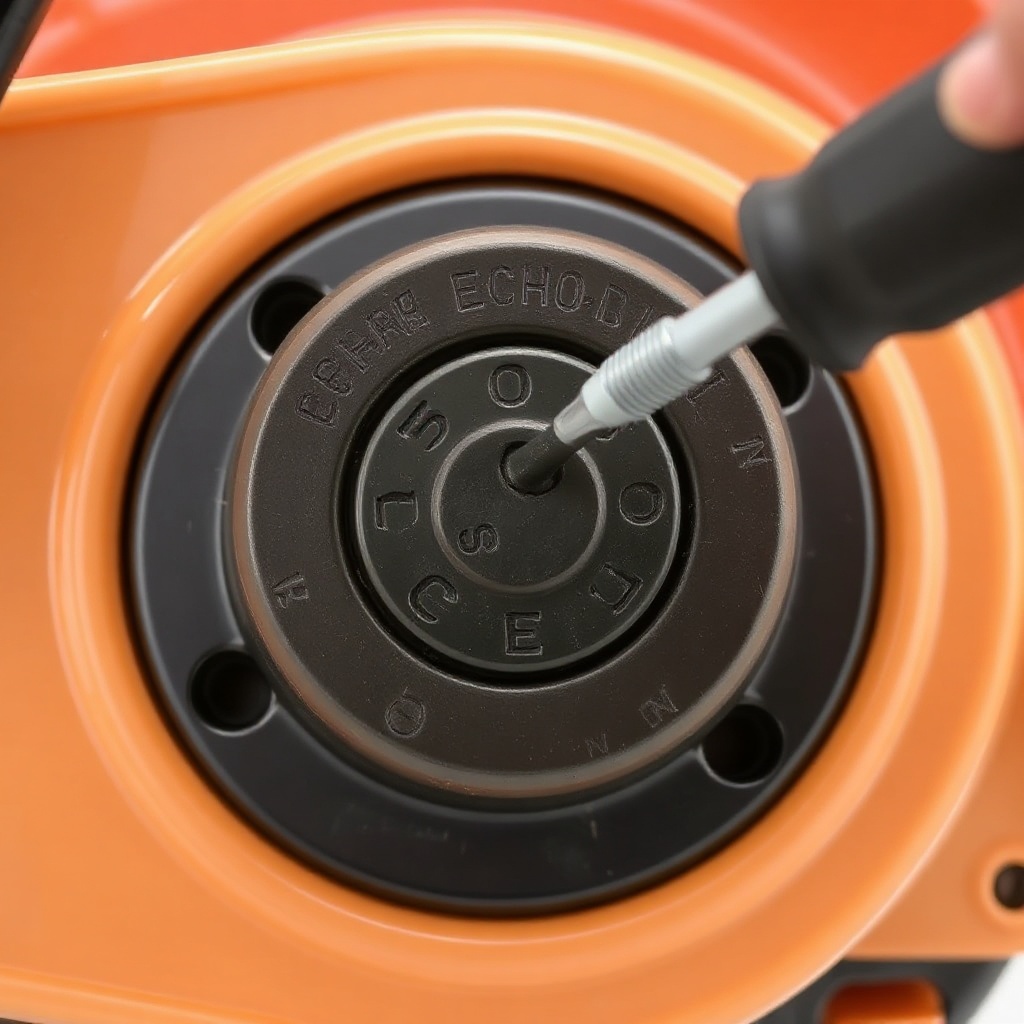
The Echo CS-590 Timber Wolf uses a gear-driven, adjustable automatic oiler. This system delivers oil directly to the bar groove and chain as the saw runs. Owners can adjust flow rate using a screwdriver-turned screw located on the bottom of the saw body. In tests, the saw consumes approximately one tank of bar oil per two tanks of fuel, which aligns with industry norms for this displacement class. However, several users report that the factory setting often delivers too little oil for extended 24-inch bar use, especially in dense hardwoods. If you notice the bar smelling hot or blue residue forming near the bar rails, increase the oil flow. For a full replacement procedure, refer to the Echo CS-590 Timber Wolf Chain Oiler Replacement Guide. Also, using the correct viscosity oil matters; low-quality oil can clog the passageways. See our Echo CS-590 Timber Wolf Bar Oil Comparison: Top Picks for Optimal Lubrication for recommended products.
What Are Common Wear Items and Maintenance Schedules?
Like any hard-working chainsaw, the CS-590 requires periodic attention to parts that wear fastest:
- Fuel filter: Replace every 3–4 tanks if you use the saw heavily. A dirty filter starves the engine, causing hesitation. See the Echo CS-590 Timber Wolf Fuel Filter Replacement Guide: Step-by-Step for Clean Fuel Flow.
- Chain catch: The plastic chain catch behind the clutch cover can crack or wear over time, especially if the chain derails. Replace it immediately if damaged. Check the Echo CS-590 Timber Wolf Chain Catch Replacement Guide.
- Recoil starter: The plastic rope guide inside the recoil housing often breaks after heavy use (200+ hours). A broken recoil stops all work. Follow the Echo CS-590 Timber Wolf Recoil Starter Replacement Guide.
- Air filter: Clean daily; replace annually or after 20 hours of dusty cutting.
- Spark plug: Check gap at 0.65 mm (0.025 in) and replace every 100 hours or at the start of each season.
Most owners find that with proper maintenance, the CS-590 runs reliably for 500–800 hours before needing a top-end rebuild. Echo offers a five-year consumer warranty on this model, which is longer than Stihl’s two-year warranty in the UK and Europe.
What Owners Say About the Echo CS-590 Timber Wolf
Across UK forums and review platforms, the CS-590 Timber Wolf commands a loyal following. Owners praise its raw grunt and ease of starting, often noting that it pulls through knotty timber where smaller saws stall. A common positive remark: “It cuts like a pro saw but costs half the price.” Many farmers and smallholders report processing 5–10 cords of mixed hardwood annually with no major breakdowns. The 20-inch bar and 59.8cc combination is consistently cited as the sweet spot for firewood duty.
Criticism focuses on three areas: weight, vibration, and the plastic chain catch. A typical user comment reads: “After two hours of bucking, my hands go numb. It’s not a problem for short sessions, but for all-day cutting, I wish I’d bought a Husqvarna with low-vibe.” The plastic chain catch has been known to snap if the chain derails under heavy load. Echo replaced the catch under warranty for most users, but it remains a known weakness. Some owners also note that the bar oil cap leaks if the saw is tipped on its side during transport. A simple fix is to replace the cap o-ring with a thicker one from a hardware store.
Frequently Asked Questions
Q: Is the Echo CS-590 Timber Wolf a professional-grade chainsaw?
A: No. Echo markets it as a “farm and ranch” saw, which means it is suitable for heavy homeowner use and light commercial firewood cutting. It lacks the magnesium crankcase, forged connecting rod, and sealed bearings of true pro saws like the Echo CS-620PW.
Q: What fuel mix should I use?
A: Use 50:1 ratio of premium unleaded (95 RON or higher) mixed with a high-quality two-stroke oil (e.g., Echo Power Blend or Stihl HP Ultra). Do not use ethanol fuel above E10, as it can damage the carburettor diaphragm.
Q: How do I adjust the carburettor on the CS-590?
A: The H (high speed) and L (low speed) screws are behind rubber plugs on the right side of the saw. Factory settings are: H 1 turn out, L 0.8 turn out from soft seat. Adjust only after verifying the saw is at operating temperature and after checking the fuel filter.
Q: Can the Echo CS-590 run a 24-inch bar effectively?
A: Yes, for cross-cutting logs up to 45 cm (18 in) diameter. For larger logs, the saw bogs down and the oiler may struggle to lubricate the full length. Keep the chain sharp and use full-chisel chain for best results.
Q: What is the average life expectancy of the Echo CS-590 engine?
A: With proper maintenance, 500–800 hours is typical before needing a piston/cylinder replacement. Many owners exceed 1000 hours by cleaning the air filter daily and using quality fuel.
Q: Are parts interchangeable between Echo and other brands?
A: Rarely. Echo uses proprietary splines and thread pitches. Chains and bars follow standard Oregon/Stihl gauges (0.050 in gauge, 3/8 in pitch), but the clutch drum and sprocket are Echo-specific. Always order genuine Echo parts for critical safety items like chain catches and recoil starters.