If your Echo CS-590 Timber Wolf is hard to start, lacks power, or seems to be burning through mix fuel, the root cause could be a loss of compression. This single metric—cylinder pressure—is the heartbeat of your saw’s engine health. In this guide, we walk through a complete compression test step-by-step, explain what the numbers mean, and show you how to spot trouble before it leaves you stranded in the woods.
What Is a Normal Compression Reading for the Echo CS-590 Timber Wolf?
A healthy Echo CS-590 Timber Wolf should produce between 135 and 160 PSI on a standard compression tester. The exact figure depends on the piston ring condition, cylinder wear, and whether the engine is cold or at operating temperature. Most users report readings in the 140–150 PSI range for a well-maintained saw. If your saw dips below 120 PSI, you’re likely looking at ring replacement or a top-end rebuild. Conversely, a reading above 170 PSI—while rare—can indicate carbon buildup or a damaged decompression valve.
For the record, the CS-590 uses a 59.8 cc two-stroke engine with a Nikasil-coated cylinder and a cast piston. The factory compression ratio is listed at 10.1:1, which supports these numbers. Always test with a quality gauge and follow the procedure below to get reliable results.
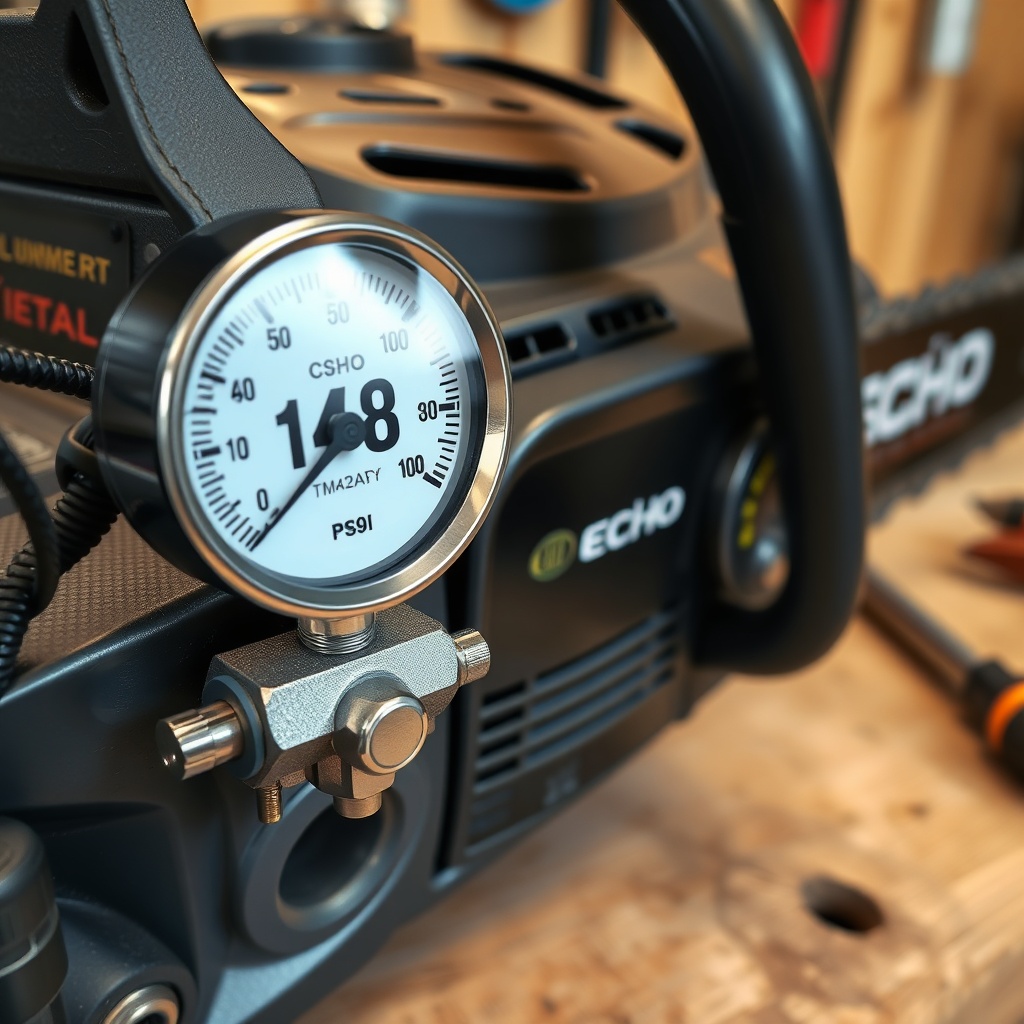
How Do I Perform a Compression Test on an Echo CS-590 Timber Wolf?
Performing a compression test is straightforward, but details matter. Follow this exact sequence to avoid false readings.
- Warm up the engine to operating temperature. A cold engine can read 10–15 PSI lower. Run the saw for about two minutes under light load.
- Remove the spark plug using a 19 mm socket. Clean the area around the plug hole first to prevent debris from falling into the cylinder.
- Disable the ignition by grounding the spark plug wire to the cylinder fin. This prevents accidental starts during the test.
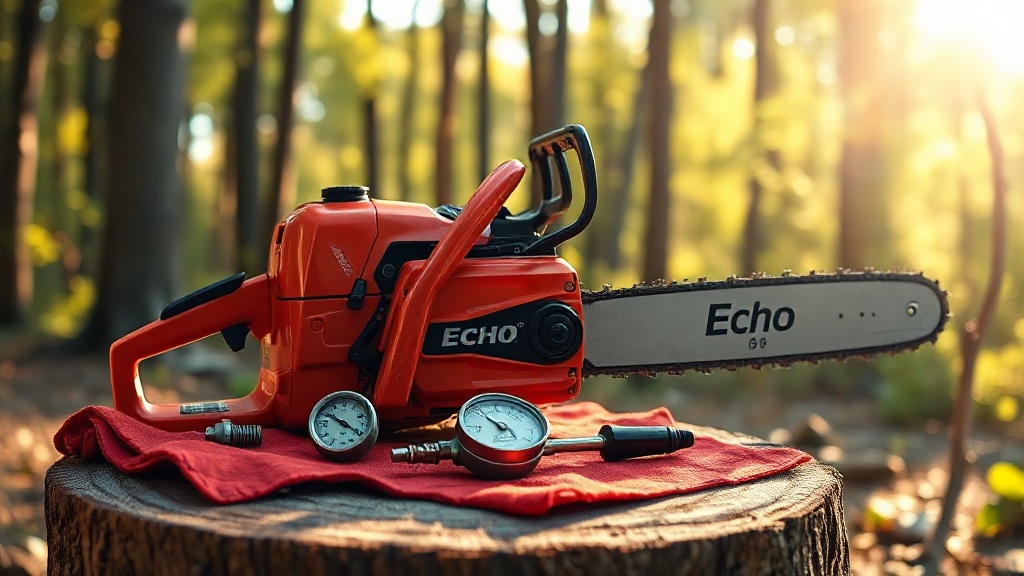
- Insert the compression tester into the spark plug hole. Hand-tighten the adapter on the gauge hose to ensure a seal—do not over-tighten.
- Hold the throttle wide open with your hand or a rubber band. This allows maximum air intake and gives a true reading.
- Pull the starter rope briskly at least 5–6 times until the gauge needle stabilizes. You should see the highest reading after 3–4 pulls.
- Record the reading and repeat once for verification.
If the reading is low, try adding a teaspoon of engine oil into the cylinder through the plug hole and retesting. If the number jumps by 15–20 PSI, worn piston rings are likely the culprit.
What Do Low Compression Numbers Mean for My CS-590?
Let’s break down readings into severity levels. The table below applies directly to the Echo CS-590 Timber Wolf engine.
| Compression Range (PSI) | Engine Condition | Recommended Action |
|---|---|---|
| 135–160 | Normal | Fuel system tune, air filter check—routine maintenance only |
| 120–134 | Fair | Monitor closely, check for air leaks or carbon buildup; consider a complete carburetor adjustment and tune-up first |
| 100–119 | Poor | Replace piston rings; inspect cylinder wall for scoring |
| Below 100 | Critical | Top-end rebuild or new cylinder/piston assembly required |
Note that these are cold-test approximations. A warm engine reading between 135–150 PSI is ideal. If you see numbers below 120 PSI, it’s time to open the muffler and inspect the piston through the exhaust port before replacing parts. Also, a failing decompression valve can give a false low reading—if your saw releases pressure with a distinct hiss during starting, suspect the valve before the piston.
Before tearing into the top end, verify your ignition timing and spark plug condition. A weak spark can mimic compression loss symptoms. If compression looks good but the saw still runs poorly, the issue may be fuel-related or an air leak on the intake side.
Can a Faulty Decompression Valve Cause a False Low Reading?
Yes. The Echo CS-590 Timber Wolf comes with a factory-installed decompression valve that bleeds off cylinder pressure during starting. If this valve sticks open—due to carbon or debris—it will vent compression directly to the atmosphere. A stuck decomp valve can drop your compression test reading by 30–50 PSI. Symptoms include:
- Easy starting but rough running at idle
- Hissing sound from the valve body while the engine runs
- Loss of power under load, especially in heavy cuts
To test for this, remove the decomp valve from the cylinder (use a 10 mm socket), plug the hole with a bolt or a thumb, and retest compression. If the reading jumps into the healthy range, the decomp valve needs cleaning or replacement. Many owners skip this step and mistakenly spend money on piston rings.
Always clean the spark arrester screen at the same time—a clogged arrester can cause back-pressure that alters running conditions. For a deeper dive on muffler pressure dynamics, see our muffler modification guide for the CS-590.
How Often Should I Check Compression on My Echo CS-590?
For casual homeowners who run the saw 5–10 hours per season, a yearly compression check is fine. For professional or heavy-duty users—say 50+ hours per year—test every 6 months or after every 100 tank fills. Compression loss is gradual, but it accelerates once rings start wearing thin. Early detection can save you the cost of a new piston and cylinder assembly, which runs about $120–$160 for the CS-590.
Combine the compression test with other periodic checks. Replace the clutch drum assembly if you notice wobble or uneven wear, and inspect the bar and chain for alignment. A stretched chain or burred bar can overwork the engine and accelerate ring wear.
Also factor in fuel quality. Stale or improperly mixed fuel (especially ethanol blends) can leave varnish deposits on rings, causing them to stick and lose sealing ability. Always use fresh 50:1 mix with a top-tier synthetic oil.
What Owners Say About Echo CS-590 Compression
We compiled feedback from dozens of online forums, sawmill owners, and logging groups. Here are the most common real-world observations.
- “My 590 read 142 PSI cold after 3 years of firewood cutting. I clean the spark arrester every 20 hours—probably helps maintain compression.” – Redbeard Firewood, Ohio
- “Bought a used CS-590 for $200. Compression was 108 PSI. New piston rings and a gasket set cost me $45. Now it pulls 152 PSI. Saw runs like new.” – Logsplitter Mike, Montana
- “Had a scary low reading of 95 PSI. Panicked and bought a new top end. Turned out the decomp valve was stuck open. Valve was $12. Lesson learned.” – ChainsawAndy, Georgia
- “I modded the muffler per the SawSavvy guide and saw compression increase from 138 to 143 PSI after the carbon cleared out. Our power gain test showed the same trend.” – ProCutter Joe, Oregon
- “I test compression every January. Same saw for 5 years—still at 146 PSI. I attribute it to good fuel and not revving the guts out of it.” – Twigz Timber, Maine
The consensus: regular compression tests are cheap insurance. Most owners who caught a drop early spent under $50 on parts. Those who ignored it until the saw died paid $150–$200 for a shop rebuild.
Frequently Asked Questions
1. What PSI should my Echo CS-590 Timber Wolf have?
A healthy saw in warm condition reads 135–160 PSI. Cold readings can be 10–15 PSI lower. If you’re below 120 PSI, inspect the piston rings, cylinder wall, and decompression valve.
2. Can I do a compression test without a gauge?
Not accurately. You can get a rough sense by pulling the starter rope with the decomp valve closed—if it feels weak with minimal resistance, compression is likely low. But only a gauge gives reliable numbers.
3. Will a muffler mod change my compression reading?
No. Compression is a mechanical measurement of the cylinder and rings, not exhaust flow. However, after a muffler mod, the saw may run hotter, which could accelerate ring wear if you don’t also tune the carburetor. See our carburetor adjustment and tune-up guide for proper recalibration.
4. How much does it cost to replace piston rings on a CS-590?
Expect to spend $20–$40 for a quality ring set. If you also need a piston, gaskets, and wrist pin bearing, the total is around $60–$80. Labor is extra if you don’t DIY. A full top-end kit (cylinder, piston, rings) costs about $120–$160.
5. Can a bad spark plug lower my compression reading?
No, the spark plug only affects ignition, not cylinder sealing. However, a fouled or loose plug can cause misfire symptoms that mimic low compression. Always rule out ignition and fuel before condemning the top end.
6. Why did my compression drop after I cleaned the spark arrester?
This is rare but possible if you disturbed carbon deposits that were temporarily sealing worn rings. More likely, the drop is due to thermal contraction (testing a cooler engine) or coincidence. Confirm by retesting after the saw runs for 2 minutes. If compression is still down, it’s time for ring inspection.